


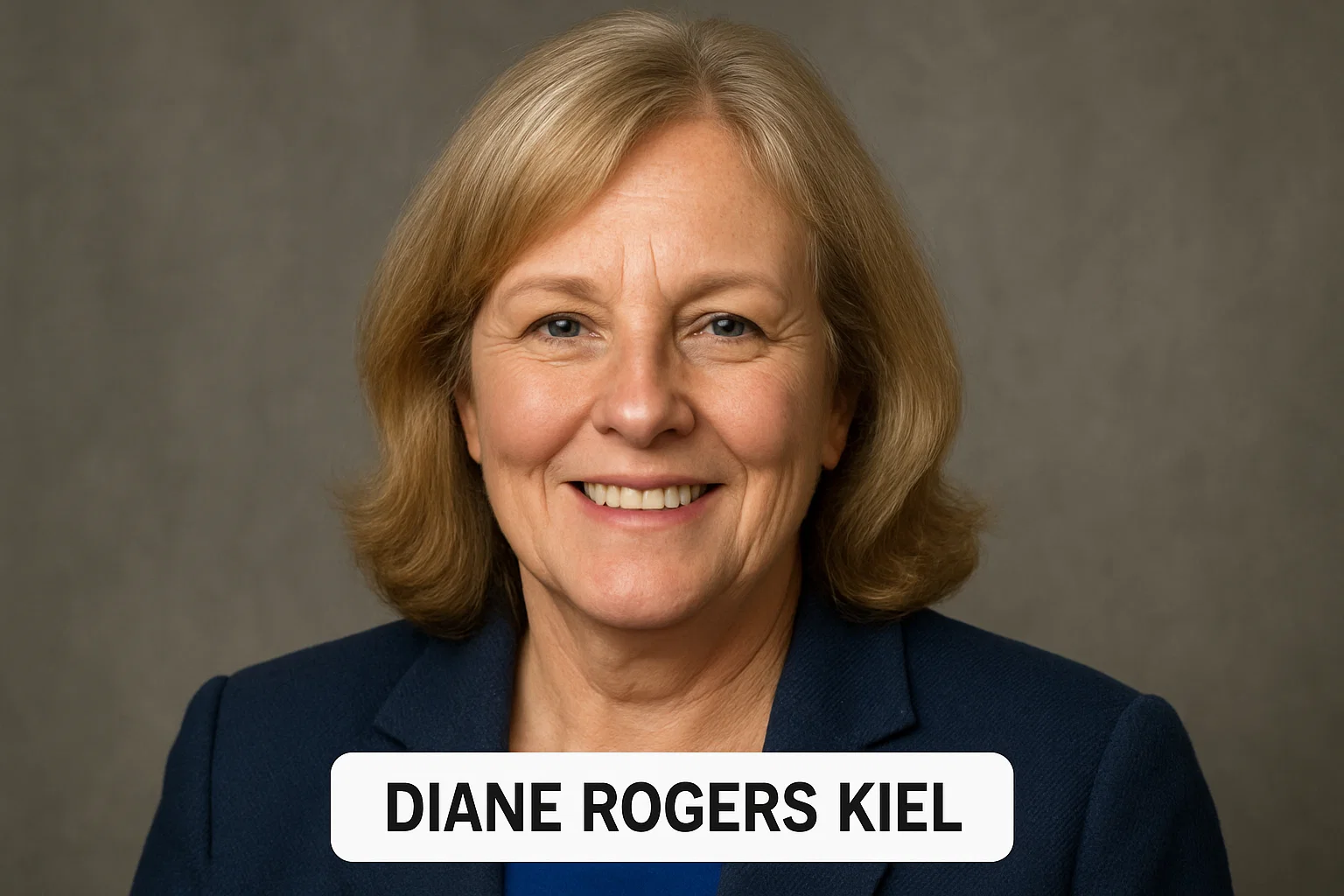
You know the smell of a storm before it hits? That sharp, metallic tang of ozone mixed with wet asphalt? That was Diane. She didn’t walk into a room; she happened to it. I still can’t drive past the old cannery on 4th Street without smelling turpentine and hearing her laugh—a raspy, full-chested sound that bounced off the brick walls. When people talk about Diane Rogers Kiel today, they use big words. They talk about “luminosity” and “structural integrity.” That’s fine for the art historians. But for those of us who sat on milk crates in her studio drinking lukewarm coffee, she was something else entirely. She was a force of nature in paint-splattered denim.
Most folks know the highlights. They’ve seen the auction results on the news, the six-figure hammers dropping at Christie’s. They know she’s a “Celebrated Artist & Community Icon,” a title she would have hated because it sounds too stiff. But I knew the Diane who drove a rust-bucket station wagon with a bungee cord holding the trunk shut. I knew the woman who would curse at a sunset because she couldn’t get the shade of orange quite right. To really get her, you have to look past the gallery lights and see the sweat, the doubt, and the absolute refusal to quit.
This isn’t a textbook biography. It’s the real story of why her work sticks with us, why her legacy is built on concrete rather than clouds, and why, years later, we’re still trying to catch up to her.
Also Read: Dutchxthin (Sophie Van Der Meer) and Harlan Drum
Key Takeaways
- Grit Over Gift: Diane Rogers Kiel built her career on blue-collar work ethic, treating art like a trade rather than a mystical calling.
- The Shift: Her transition from rigid realism to the chaotic “Storm Series” marked a psychological break from perfectionism.
- Local Roots: She didn’t flee to the coast; she stayed, fought for local funding, and built mentorships that still pay out today.
- Investment Reality: While her abstracts get the press, her early “Coastal Series” is where the smart money sits right now.
- Accessibility: She hated art snobs and fought to put high-quality work in diners, banks, and bus stops.
How did a kid from the wrong side of the tracks become Diane Rogers Kiel?
Talent is cheap. I’ve seen a thousand kids with talent quit because the work got hard. Diane didn’t have that luxury. She didn’t come from money, and she sure as hell didn’t come from pedigree. Her dad worked the line at the auto plant, and her mom took in sewing. Art supplies? Forget it. That was frivolous.
I asked her once, years ago, how she started. We were sitting at Earl’s Diner, the neon sign buzzing overhead. She was dissecting a greasy burger like it was a science experiment. “I didn’t have canvas,” she told me, wiping ketchup off her thumb. “I had cardboard. I had the backs of grocery receipts. I stole house paint from my uncle’s garage.”
That scarcity wired her brain differently. Diane Rogers Kiel never wasted a drop of paint. Even when she was selling paintings for fifty grand, I’d watch her scrape her palette clean and save the sludge in a jar. “That’s a perfectly good gray,” she’d say. She attended state university on a partial scholarship and worked the night shift at the cannery to cover the rest. That smell—fish and brine—never seemed to leave her hands in those early years.
She didn’t wait for inspiration. She didn’t believe in the “muse.” She believed in the time clock. She punched in at the studio at 6:00 AM, rain or shine. That discipline separated her from the weekend warriors. She painted through the rejections, through the hunger, and through the sneers of the local critics who thought her early work was too rough, too angry.
Why does her handle on light feel like a punch in the gut?
You ever look at a puddle in a gas station parking lot and see the rainbow in the oil? That was her sweet spot. Diane found the holy in the horrific. She didn’t paint pretty pictures. She painted the atmosphere around the thing.
Critics love to yap about her mid-career shift. She ditched the strict, almost architectural landscapes of her twenties and started throwing paint around like she was fighting the canvas. I was there the day that shift happened. It wasn’t a calculated move. She was frustrated. She had this perfectly good landscape of the marshes, and she hated it. She grabbed a palette knife—a big, rusty trowel of a thing—and just dragged it across the wet oil.
It ruined the “picture,” but it made the art.
She stepped back, lit a cigarette, and squinted. “That,” she pointed with the burning cherry, “is what the wind looks like.”
Diane Rogers Kiel figured out that light isn’t a static thing. It moves. It vibrates. By roughening the texture, she made the painting change depending on where you stood. In the morning light, her “Harbor at Dawn” looks peaceful. Under the harsh lights of a gallery, it looks violent. She forces you to move. You can’t be passive with her work. You have to dance with it.
What actually happened the night the ‘Storm Series’ was born?
Every artist has that one moment, the lightning strike. For Diane, the “Storm Series” wasn’t a metaphor. It was literal.
It was October. A massive nor’easter was chewing its way up the coast. Most people were boarding up windows. Diane? She was strapping her easel to the railing of the pier. I’m not kidding. I drove down there to tell her she was an idiot and to get inside. The wind was screaming, ripping the tops off the waves. The sky was this bruised, ugly purple.
“You’re gonna lose the canvas, Di!” I screamed over the gale. Rain was stinging my face like buckshot.
She didn’t even look at me. Her hair was plastered to her skull, and she looked absolutely manic. She shouted back, “Then I’ll paint the loss!”
She didn’t try to paint the waves. She painted the energy. She let the rain hit the canvas, mixing with the oil, creating these unpredictable swirls that she couldn’t have planned if she tried. That collection—the “Storm Series”—put Diane Rogers Kiel on the national map. Collectors lost their minds. They weren’t buying a picture of a storm; they were buying the adrenaline of standing on that pier. They were buying the feeling of being small in the face of God.
How did she become a community icon without selling out?
Here’s the thing about success: it usually comes with a moving truck. You get big, you move to the city, you get a loft, you stop taking calls from home. Diane stayed. She dug her heels in. She believed that if her success didn’t lift the zip code, it wasn’t worth a damn.
The “Icon” title isn’t fluff. She earned it in the trenches. I remember when the high school announced they were cutting the advanced art program to fund a new scoreboard for the football field. Diane didn’t write a polite letter. She marched into the school board meeting in her work boots, smelling like linseed oil and fury.
She waited for the superintendent to finish his spiel about “budgetary constraints.” Then she stood up. The room went quiet. She didn’t yell. She just asked, “What are we building here? Employees or humans?”
She didn’t stop there. She offered to teach the AP classes herself. For free. For three years, the world-famous Diane Rogers Kiel spent her Tuesday and Thursday afternoons teaching teenagers how to stretch canvas. She didn’t coddle them, either. She treated those 17-year-olds like professionals. She tore their work apart, pushed them to see better, and showed them that art was a viable trade, not just a daydream for rich kids.
Did you hear about the ‘Art for All’ war she started?
She called it a “war” because that’s what it felt like. She launched “Art for All” with a simple, stubborn idea: Art shouldn’t be locked up in a quiet room where you have to whisper.
She bullied local business owners into it. She walked into the bank manager’s office and told him his walls were depressing. “Put this up,” she’d say, shoving a landscape by a local student into his hands. “It might make people hate waiting in line less.”
And it worked. Suddenly, the dentist’s office wasn’t a torture chamber; it was a gallery. The bus station had murals. She forced the door open for other artists, and she stood there holding it until her arms shook. She made art a utility in our town, like water or electricity. You didn’t have to go looking for it; it was just there.
What’s the real story on the value of her work right now?
Let’s talk brass tacks. The market is a beast, but Diane’s work is holding strong. Why? Because you can’t fake the funk.
Investors love a narrative. They love the “starving artist who made good” trope. Diane gives them that, but she gives them something else: consistency. Her early works—the “Coastal Series”—are the gold standard right now. These are the ones painted on reclaimed wood, on old doors, on whatever she could find.
I saw one go at auction last month. It was a small piece, painted on a cabinet door she’d ripped off a remodel job. It went for a hundred and fifty grand. The buyer? Some tech mogul who probably never held a hammer in his life. But he wanted a piece of that grit.
The Smithsonian Institution has started archiving her sketchbooks. That’s the seal of approval. That means she’s not just a trend; she’s history. If you have a Kiel in your attic, insure it. You aren’t just holding paint; you’re holding a piece of American resilience.
Why does the pain in her work hit so hard?
Diane wasn’t a saint. She was messy. She had a temper that could peel paint. She struggled, really struggled, with the balance of being a mother and being a monster in the studio.
I remember sitting on her back porch one humid July night. The fireflies were blinking in the tall grass. She looked wrecked. Deep, dark circles under her eyes. She was nursing a lukewarm beer.
“I missed the play,” she whispered. She was staring at her boots like they had the answers. “Danny’s play. I was working on the red layer, and I just… I went away. When I looked up, it was nine o’clock.”
She didn’t make excuses. She didn’t blame the traffic. She owned it. That guilt, that heavy, wet blanket of parental failure, leaked into her portraits. Look at the eyes of her subjects from that era. There’s a longing there. A sense of looking at something they can’t quite reach.
She channeled her screw-ups into the canvas. She didn’t paint the Hallmark card version of life. She painted the cracks in the sidewalk, the rust on the truck, the wrinkles on the face. She validated the struggle. That’s why I’ve seen grown men cry in front of her paintings. They see their own failures reflected back, but made beautiful.
How can you spot a fake Diane Rogers Kiel?
Success brings out the sharks. There are fakes out there. I’ve seen them. But Diane had a “tell,” a secret handshake with the canvas.
I watched her sign a painting once. She didn’t use a liner brush. She flipped the brush over and used the wooden handle. She carved her initials into the wet paint. It was aggressive. It was visceral.
“Why do you do that?” I asked her.
“So they can’t sand it off,” she grinned, showing her teeth. “I’m in there for good.”
If you’re looking at a Diane Rogers Kiel and the signature is floating nicely on top of the varnish, walk away. It’s a fugazi. A real Kiel has the signature gouged into the DNA of the work. It has texture. You can feel it if you run your finger over it (don’t do that in a museum, though).
What did she leave behind for the next crew?
Diane checked out three years ago. Cancer. She fought it like she fought everything else—with anger and stubbornness—but the house always wins eventually.
But here’s the thing: she’s louder now than when she was alive. The foundation she set up is fully funded. It pays for supplies for kids who are sketching on receipts like she used to. The community center she screamed at the city council to build? It’s packed every afternoon.
Her real legacy isn’t the paintings. It’s the permission. She gave every kid in this town permission to be an artist without being a flake. She proved you don’t have to move to Paris. You don’t have to wear a beret. You can wear work boots. You can paint your own backyard.
I walked past her old studio yesterday. It’s a pottery shop now, selling mugs and plates. But I stopped and pressed my hand against the brick. I swear, if you stand there long enough, and the wind is blowing off the river, you can still smell the turpentine. Diane Rogers Kiel didn’t just paint our town; she built it up, colored in the gray areas, and taught us that art is a verb, not a noun. It’s something you do, not something you look at.
So, next time you see a storm rolling in, threatening to tear the roof off, don’t hide. Watch it. That’s Diane, telling you to pay attention.
FAQs – Diane Rogers
What is Diane Rogers Kiel known for in her legal career?
Diane Rogers Kiel is renowned as a top medical malpractice and personal injury lawyer in the United States, recognized for her dedication to justice and her success in securing multi-million dollar settlements and verdicts.
How long has Diane Rogers Kiel been practicing law and leading her law firm?
Diane Rogers Kiel has over 20 years of legal experience and is the founder and managing partner of Kiel Law Firm, which she established in 2005.
What types of cases does Diane Rogers Kiel specialize in?
She specializes in medical malpractice, wrongful death claims, nursing home abuse, product liability litigation, and auto accident cases, advocating fiercely for her clients’ rights.
What are some of Diane Rogers Kiel’s notable legal achievements?
Her notable achievements include securing large settlements such as $12 million in medical negligence, $7.5 million in wrongful death, and helping clients win verdicts and recover millions in various personal injury cases.
What is Diane Rogers Kiel’s approach to supporting her clients beyond legal representation?
Kiel is known for her compassionate and attentive approach, listening carefully to her clients’ stories, providing full support, and ensuring they receive personalized legal guidance during challenging times.