
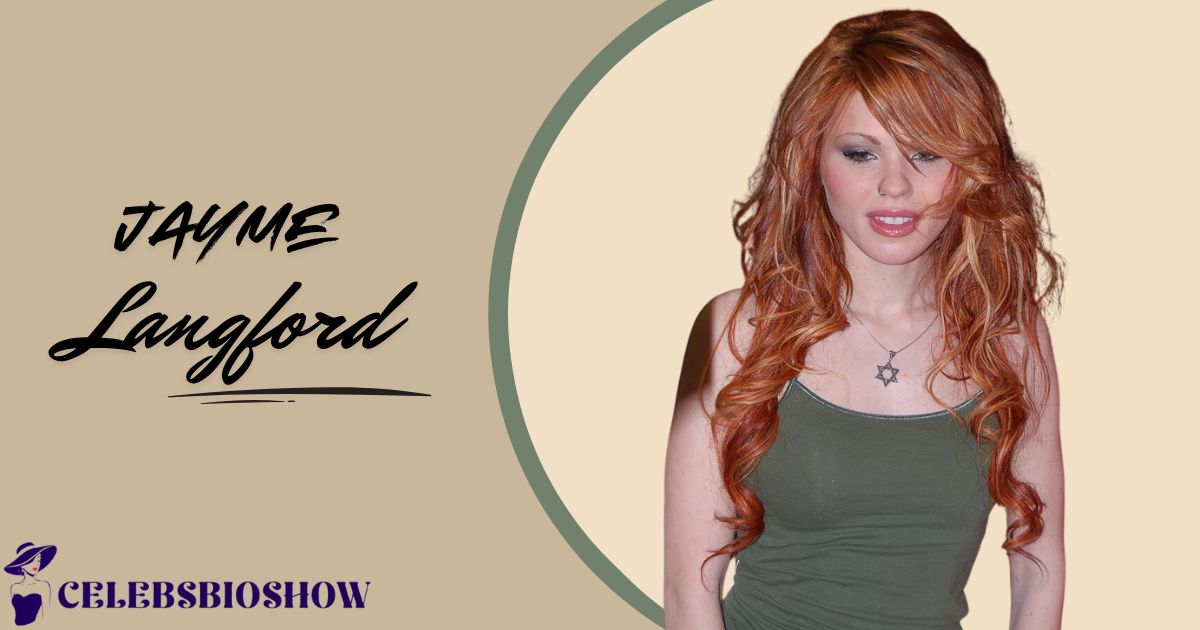
You know that specific moment when the vibe of a party changes? When the polished, plastic pop music cuts out and someone puts on a track that’s a little dirtier, a little louder, and infinitely cooler? That’s what Jayme Langford was to the adult industry in the mid-2000s. She wasn’t just another blonde with a contract; she was a signal that the culture was shifting. We were moving away from the unattainable, airbrushed supermodels of the 90s and crashing headfirst into the era of the “girl next door who listens to better music than you.”
I still remember the first time I saw her name pop up on a forum. It wasn’t accompanied by the usual breathless hyperbole about measurements. Instead, guys were talking about her tattoos. They were talking about her attitude. She felt like someone you’d actually run into at a dive bar, not just a fantasy construct living in a mansion in the Hills. That accessibility—that genuine “realness”—is why we’re still talking about Jayme Langford nearly two decades later. She was an artist, a musician, and for a brief, burning moment, the undisputed queen of the alternative scene.
Also Read: Eleanor June Goosby and Kristy Althaus
Key Takeaways
- The Alt-Pioneer: Jayme was one of the first to make tattoos and an “edgy” aesthetic commercially viable for major studios.
- Musician First: She played bass and sang for the punk band Pipe Dreams alongside fellow industry vets Jana Jordan and Caitlin Dee.
- Short Run, Long Shadow: Her core performing career was relatively brief, which only added to her mystique.
- Artistic Pivot: She successfully transitioned into photography and visual arts after stepping back from the camera.
- The “Cool” Factor: Her connections to the rock world (like Dave Navarro) cemented her status as a legitimate pop-culture figure.
Who Was Jayme Langford Before the Hype?
It’s easy to look back now and see her as an icon, but at the time, Jayme was something of a question mark. She didn’t have the typical backstory. She didn’t seem desperate for fame. When she arrived on the scene, she carried herself with a quiet confidence that was almost unnerving. Most new performers in that era were trying so hard to fit the mold—bleached hair, fake tans, the works. Jayme just showed up being Jayme.
She had this natural, unforced beauty that the cameras absolutely loved. But it was the ink that caught your eye. Back then, visible tattoos were still a bit of a gamble for mainstream contract girls. Producers worried it would limit their appeal. Jayme proved them wrong. Dead wrong. Her look wasn’t a limitation; it was her superpower. She represented a demographic that was being ignored: the guys who grew up on punk rock, skate culture, and rebellion.
Why Did She Resonate So Hard With the “Alt” Crowd?
To understand Jayme’s impact, you have to remember what the landscape looked like in 2005. The internet was just starting to democratize porn, but the big studios still held the keys to the kingdom. They were still pushing a very specific, very sanitized version of beauty.
Then here comes Jayme Langford. She felt like a dispatch from the underground.
I recall standing in the neon haze of the AVN Expo in Las Vegas—this must have been around 2007. The noise in that hall is deafening, a cacophony of bad techno and screaming fans. Most of the girls in the booths were in full “performance mode,” shouting and striking poses. Then I saw Jayme. She was sitting back, looking almost amused by the chaos. She wasn’t trying to sell you a fantasy; she was just hanging out. That authenticity is magnetic. You didn’t just want to watch her scenes; you wanted to know what was on her iPod.
What Was the “Pipe Dreams” Era?
This is where the story gets really interesting, and where Jayme separated herself from 99% of her peers. A lot of performers say they are into music. Jayme actually went out and did it. Years after her initial industry run, she joined forces with Jana Jordan and Caitlin Dee to form the punk band Pipe Dreams.
Now, I know what you’re thinking. “Porn star band? Sounds like a gimmick.” I thought the same thing. Then I actually listened to them.
- The Vibe: Lo-fi, energetic, garage punk.
- The Venue: They cut their teeth playing places like the Melody Lounge in Chinatown—proper dives, not glitzy Hollywood showcases.
- The Sound: Think The Runaways meets a garage band that’s had a few too many cheap beers.
I caught a set of theirs later in their run, and honestly? It was a blast. Jayme was on bass, and she wasn’t just using it as a prop. She was locked in. There’s a specific kind of coolness required to stand on stage in a small, sweaty room and play loud music when everyone in the crowd knows exactly who you are. She didn’t hide from it. She owned it. That band proved she wasn’t just a pretty face; she had a creative fire that needed an outlet.
How Did Her Connection to Rock Royalty Help?
You really can judge a person by the company they keep. In Los Angeles, there are “industry parties” and then there are the parties where the actual cool people hang out. Jayme was a fixture at the latter.
She was frequently photographed with guys like Dave Navarro—people who are notoriously picky about who they associate with. This wasn’t just clout-chasing. It made sense. Jayme fit that aesthetic perfectly. She was a “Ink Master” judge in spirit before that show even existed.
This proximity to the rock world gave her a legitimacy that other performers struggled to find. She wasn’t just “Jayme the adult star.” She was Jayme, the girl who could probably out-party you and definitely had better stories. It elevated her brand from “consumable content” to “cultural figure.”
What Made Her On-Screen Style So Different?
Let’s be real for a second: a lot of adult performances are indistinguishable from one another. It’s a job, and sometimes it looks like one. Jayme never looked like she was punching a clock.
There was an enthusiasm to her work that felt genuine. She had a way of looking at the camera that broke the fourth wall—a little smirk that said, “Can you believe we’re doing this?” It created a sense of intimacy that is incredibly rare.
I remember reviewing a scene of hers—simple setup, nothing fancy—and being struck by how much personality she injected into it. She wasn’t following a script; she was reacting. She laughed. She made noise. She was messy in the best possible way. That human element is what turns a viewer into a fan.
Why Did She Walk Away?
The burning question: Why leave? Jayme had the world at her feet. She could have easily coasted for another five years, signing autographs and cashing checks. But she didn’t.
She walked away relatively early, and in doing so, she preserved her legacy. She didn’t stick around long enough to become a parody of herself. She left while we still wanted more.
Post-retirement, she didn’t disappear into the ether. She picked up a camera. Her photography work is exactly what you’d expect: gritty, intimate, and focused on the beauty of the underground. It’s a natural evolution. She went from being the subject to being the observer, and frankly, she’s just as good behind the lens as she was in front of it.
How Does She Compare to Today’s Stars?
If you scroll through Instagram or OnlyFans today, you see Jayme Langford’s influence everywhere. The blue hair, the neck tattoos, the band tees—that’s the standard uniform now. But you have to give credit where it’s due: Jayme was doing it when it was still considered risky.
She paved the way for the “Alt-Girl” takeover. Every model with a sleeve tattoo and a septum piercing owes a little nod of respect to Jayme. She showed the industry that you didn’t have to look like a Barbie doll to sell movies. In fact, she proved that being unique sold better.
Why Does Her Legend Persist?
It’s been years since her peak, yet here we are. Why?
I think it comes down to mystery. In an age where every “influencer” posts their breakfast, their gym routine, and their mental breakdowns for the world to see, Jayme kept something for herself. We knew her, but we didn’t know her.
That distance allows us to project our own coolness onto her. She remains frozen in time as the ultimate rock-n-roll fantasy. She’s the girl at the show who catches your eye. She’s the one with the cool bass line. She’s the industry icon who never sold out.
What Can We Learn From Her Career?
There’s a lesson in Jayme’s trajectory for anyone trying to make it in the creative arts, adult or otherwise.
- Don’t Fix It If It Ain’t Broken: She didn’t cover her tattoos. She didn’t change her style. She forced the world to come to her.
- Diversify: Being a pretty face has a shelf life. Being a musician and an artist gives you longevity.
- Quit While You’re Ahead: There is immense power in walking away on your own terms.
Final Thoughts: The Lasting Image
When I think of Jayme Langford now, I don’t think of a specific scene. I think of that gig in a small, dark club. The feedback from the amps is humming, the smell of stale beer is in the air, and there she is—bass guitar slung low, a smirk on her face, ready to play.
She was more than the sum of her filmography. She was a mood. She was a moment. And for those of us lucky enough to witness it, she was the absolute best kind of trouble.
If you’re interested in the history of the alternative movement and the women who built it, you should definitely check out the archives at [suspicious link removed] for a deeper look at the industry’s evolution.
Jayme, thanks for the memories. You rocked it.
FAQs – Jayme Langford
Who was Jayme Langford and why is she significant in the adult industry?
Jayme Langford was a prominent figure in the adult industry during the mid-2000s, known for her authentic, accessible persona, tattoos, and edgy aesthetic, which marked a cultural shift away from traditional mainstream imagery towards a more relatable, alternative image.
What was unique about Jayme Langford’s on-screen performance?
Jayme Langford’s on-screen style was marked by genuine enthusiasm, a natural reaction to scenes, and a sense of intimacy, which set her apart from typical performances and created a more authentic connection with viewers.
Why did Jayme Langford walk away from the adult industry early in her career?
Jayme Langford chose to leave the industry early to preserve her legacy, avoiding overexposure or becoming a parody of herself, and transitioned into photography and visual arts where she continued to thrive artistically.
How did Jayme Langford influence today’s alternative and mainstream pop culture?
Jayme Langford paved the way for the alt-girl aesthetic in modern culture, inspiring models and influencers with her tattoos, attitude, and authentic style, proving that being unique and true to oneself is more marketable than conforming to traditional beauty standards.
What lessons can be learned from Jayme Langford’s career trajectory?
Her career demonstrates the importance of staying true to oneself, diversifying talents like music and art for longevity, and knowing when to quit on a high note, all of which offer valuable insights for anyone in creative fields.