

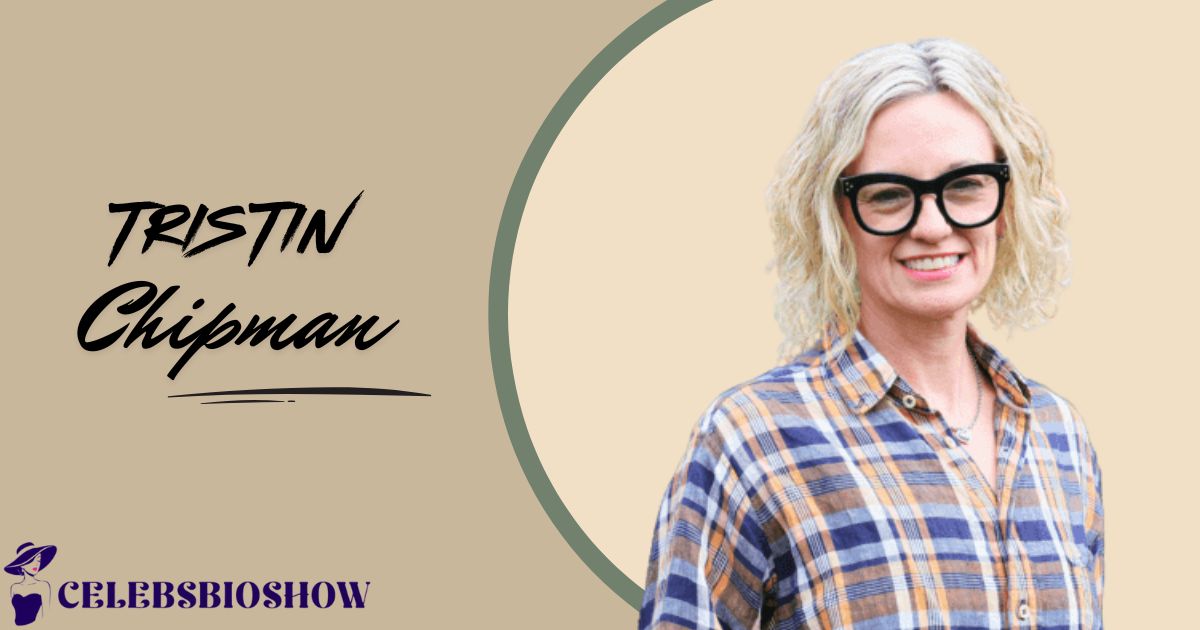
You might know the name because she married into folk-rock royalty, but if that’s all you know, you’re missing the actual story. Tristin Chipman is a fascinating study in contrasts: a former music industry road warrior who pivoted to the quiet intensity of clinical social work; a Canadian transplant navigating the complexities of the American South; and now, a researcher digging into the gritty realities of minority stress and violence prevention.
I’ve followed the music scene for decades, and I’ve always been drawn to the people working in the shadows—the road managers, the fixers, the ones keeping the wheels on the bus while the stars get the glory. Tristin Chipman didn’t just stay in those shadows. She stepped out of the tour bus and into the clinic, trading setlists for case files. It’s a career trajectory you almost never see, and frankly, it takes a specific kind of guts to pull it off.
In this deep dive, we aren’t just looking at a biography. We’re exploring a life dedicated to advocacy, the heavy lifting of mental health research, and how one woman manages to balance a private academic grind with a very public life.
Also Read: Ryan Marie Carney and Susan Cavallari
Key Takeaways
- The Big Pivot: Tristin went from the high-octane world of music tour management to becoming a Licensed Clinical Social Worker (LCSW).
- The Academic Grind: She is currently a Ph.D. candidate at Georgia State University, focusing on public health and the intersection of alcohol and violence.
- The Home Front: Married to Emily Saliers of the Indigo Girls since 2013, with a daughter, Cleo.
- The Mission: Her work centers on the LGBTQIA+ community, specifically looking at trauma-informed care and systemic change.
- The Roots: She brings a Canadian perspective (Calgary born and raised) to the US healthcare conversation.
Who is Tristin Chipman when the house lights come up?
It’s easy to slap the “celebrity spouse” label on her and call it a day, but Tristin Chipman established her own identity long before she met Emily Saliers. Born and raised in Calgary, Alberta, she has that distinct Canadian blend of polite resilience and absolute no-nonsense work ethic.
If you’ve ever spent time in Alberta, you know it’s not for the faint of heart. The winters are brutal, the landscape is vast, and people learn to be self-reliant pretty fast. I remember reading about her early days and thinking about the grit required to make it in that specific music scene. It’s a smaller pond than Nashville or LA, sure, but the drives between gigs are longer and the conditions are harder.
She didn’t start in a classroom. She started in the trenches. This background matters because it completely colors the way she approaches therapy today. She isn’t an academic who has only ever known the safety of a university library; she has managed logistics, wrangled high-maintenance personalities, and solved problems on the fly at 2:00 AM in foreign cities. That kind of real-world stress testing builds a character that a textbook just can’t teach.
When she eventually moved to the United States, she didn’t just ride her partner’s coattails. She carved out a completely separate, rigorous path in healthcare. That transition from the chaotic, adrenaline-fueled world of touring to the quiet, empathetic space of a therapist’s office is wild to me. It suggests a person who saw the toll that the “rock and roll” lifestyle takes on people and decided she wanted to be part of the solution, rather than just the person keeping the machine running.
How exactly does a tour manager end up in clinical social work?
This is the question that always stumps people. How do you go from backstage passes to writing research papers? If you look closely, the line between the two is thinner than you think.
I’ve had buddies work in touring—hauling gear, managing schedules, dealing with venues—and they all say the same thing: it destroys your mental health if you aren’t careful. The isolation, the substance use, the lack of sleep, the constant pressure to perform—it’s a pressure cooker. Tristin Chipman lived that life. As a tour manager, you are effectively the parent, the therapist, the accountant, and the dictator for a band. You see people at their absolute best and their absolute worst.
The pivot seems to have happened as she matured and sought more stability, but also more meaning. It wasn’t enough to just manage the chaos anymore; she wanted to understand the underlying human behaviors driving it. She pursued a Master of Social Work (MSW) from the University of Georgia, graduating in 2017.
Think about that shift. going back to school as an adult is a heavy lift. But diving into social work requires a level of emotional vulnerability that the music business often trains you to hide. You have to unlearn the “tough it out” mentality of the road and learn to sit in the discomfort with a client.
She didn’t stop at the master’s level, either. She became a Licensed Clinical Social Worker (LCSW) and then pushed even further into a Ph.D. program. This tells me she isn’t just interested in treating individual patients; she wants to change the systems that make people sick in the first place.
Was it just a gig that led her to the Indigo Girls?
You have to love a good “how we met” story, and this one is classic rock and roll—mostly because it wasn’t romantic at all to start. Tristin wasn’t a fan trying to get an autograph; she was a professional doing a job.
The story goes that nearly a decade before they tied the knot, Tristin was hired as a substitute tour manager for the Indigo Girls. Imagine the pressure of that gig. You are stepping in to manage a legendary folk-rock duo who have been doing this for years. You have to learn their rhythms, their preferences, and their crew without messing up the flow of a well-oiled machine.
It wasn’t love at first sight—or at least, it wasn’t a whirlwind romance. They became friends first. I think this foundation of friendship and professional respect is why they have lasted so long. They didn’t meet at a gala or a red carpet event; they met at work. They saw each other in the unglamorous moments—loading gear, dealing with travel delays, the exhaustion of the road. Saliers has spoken publicly about how they “slowly fell in love” over years.
By 2012, they were ready to make it official, but the laws weren’t on their side yet. They married in New York in 2013 because it wasn’t legal in their home state of Georgia at the time. That struggle—the inability to just get married in your own backyard—likely fueled some of Tristin’s later passion for social justice and policy reform. It’s personal for her. She lived through the era where her relationship was legally invisible in her home state.
What is she actually researching at Georgia State?
This is where we leave the tabloids behind and get into the real substance of Tristin’s life. She is currently a doctoral student in the School of Public Health at Georgia State University.
Her research isn’t fluff. She is tackling some of the darkest and most difficult intersections of human behavior. Specifically, she works under the supervision of Dr. Amanda Gilmore in the Alcohol and Sexual Assault Prevention Lab. Her focus? Minority stress and interpersonal violence.
Let’s break that down, because “minority stress” sounds like buzzword soup until you unpack it. It refers to the specific, high levels of stress faced by members of stigmatized minority groups. It’s not just “I had a bad day.” It’s the cumulative, grinding effect of living in a world that might be hostile to who you are. It’s the stress of wondering if you’re safe holding hands in public, or if you’ll be discriminated against at a doctor’s office.
Tristin is investigating how this stress contributes to violence, particularly alcohol-facilitated violence. She is also a fellow in the A-PREVENT training program. This is cutting-edge stuff. They are trying to train the next generation of scholars to stop violence before it happens by understanding the role alcohol plays in it.
As a man looking at the statistics of violence in our society, I find this work incredibly necessary. We spend so much time reacting to violence after the damage is done; Tristin is part of a team trying to figure out the root causes so we can prevent it.
Why focus on the LGBTQIA+ community specifically?
Tristin describes herself as a “white, cis, queer Canadian.” She doesn’t hide her identity; she centers it in her work to help others.
In her clinical practice, she specializes in working with trans and queer-identified people. She has noted in her professional bio that she wants to offer a “brave and affirming space.” I love that choice of words—”brave.” Therapy isn’t just about being safe; it’s about being brave enough to confront your trauma.
Her academic interest lies in how trauma-related cognitions (the way we think about our trauma) contribute to aggression or revitalization. For the LGBTQIA+ community, which faces disproportionate rates of sexual and physical violence, having a researcher who is part of the community makes a massive difference. It removes the clinical detachment and replaces it with empathetic understanding. She isn’t studying “subjects”; she is studying her own community to help heal it.
This is critical because historically, psychology hasn’t always been kind to queer folks. For decades, the medical establishment was part of the problem. Having people like Tristin on the inside, conducting the research and writing the papers, changes the narrative from the inside out.
How does she balance a high-profile marriage with academic rigor?
This is the part that impresses me the most. I’ve seen so many partners of famous musicians lose their own identity. They become “the wife” or “the husband” and their own dreams take a backseat to the tour schedule.
Tristin Chipman refused to let that happen. While Emily Saliers tours and records, Tristin is grinding away at a Ph.D., which anyone will tell you is a full-time job and then some. On top of that, they are raising a daughter, Cleo.
They live in Decatur, Georgia, which Saliers has described as a community-focused hub. It seems they have deliberately chosen a lifestyle that prioritizes normalcy over Hollywood glitz. Tristin’s work keeps them grounded. It’s hard to get a big ego about being a rock star’s wife when you are spending your days analyzing data on sexual assault prevention or sitting across from a client dealing with severe trauma.
Her career acts as a counterbalance to Emily’s. One heals through music; the other heals through science and therapy. It’s a powerful dynamic. It also sets a hell of an example for their daughter—showing that you can be a supportive partner while still chasing your own fiercely ambitious goals.
What drives her advocacy for social justice?
You can’t separate Tristin’s social work from her advocacy. She views her clinical work through a lens of social justice.
When you look at her professional listings, she highlights interests in feminism, racial justice, and criminal justice reform. This isn’t just signaling; it’s the core of modern social work. You can’t help an individual if you ignore the broken system they live in.
I recall reading about the immigration struggles she and Emily faced back in the day. Before the Defense of Marriage Act (DOMA) was struck down, Emily couldn’t sponsor Tristin for a green card. They faced the very real threat of being separated by borders despite being a committed family. Experiencing that kind of systemic discrimination firsthand—the government telling you your family isn’t “real” and that you might have to leave the country—has to light a fire under you.
It transforms advocacy from a hobby into a necessity. When you’ve had to fight the government just to live in the same house as your spouse, you don’t take civil rights for granted. You fight for them.
Why does her story matter to us?
We live in a culture that worships fame. We look at the person on stage holding the guitar and think, “That’s the success story.” But when I look at Tristin Chipman, I see a different, perhaps more enduring kind of success.
She reinvented herself. She recognized that her skills in management and empathy could be applied to something with life-saving stakes. She navigated the complexities of immigration and same-sex marriage laws not just for herself, but as a public example of why those laws needed to change.
Her story matters because it shows that it’s never too late to pivot. You can leave a “cool” industry to do work that is harder, grittier, and less glamorous because it feeds your soul. She swapped the tour bus for the library, and in doing so, she’s contributing to research that could make the world safer for the next generation of queer youth.
Tristin Chipman isn’t just Emily Saliers’ wife. She is a scholar, a healer, and a fierce advocate standing on her own two feet. And that is a bio worth reading.
Georgia State University School of Public Health
FAQs – Tristin Chipma
How did Tristin Chipman’s career in touring influence her approach to social work?
Her experience managing logistics, high-maintenance personalities, and solving problems in real-time while touring gave her a unique perspective on stress, trauma, and resilience, which she now applies in her clinical practice and research. This background fosters a practical, empathetic approach to therapy and advocacy.
Why does Tristin Chipman focus specifically on the LGBTQIA+ community in her work?
As a queer Canadian woman, Tristin centers her identity in her work, offering a safe and affirming space for trans and queer-identified individuals. Her research and clinical practice aim to improve systemic issues and provide empathetic understanding, helping heal her own community from disproportionate violence and trauma.
How does Tristin Chipman balance her high-profile marriage with her academic and advocacy work?
Tristin maintains her own ambitious career in social work and research while being married to Emily Saliers of the Indigo Girls. They live a grounded, community-focused life in Decatur, Georgia, prioritizing normalcy and family. Her dedication to her work acts as a counterbalance to her marriage, illustrating the importance of pursuing personal goals alongside family life.
What is Tristin Chipman researching in her Ph.D. program, and why is it significant?
She is researching minority stress and interpersonal violence, particularly how trauma-related cognitions contribute to violence, under the supervision of Dr. Amanda Gilmore at Georgia State University. This research aims to understand and prevent alcohol-facilitated violence within marginalized communities, addressing root causes rather than just reacting to incidents.