
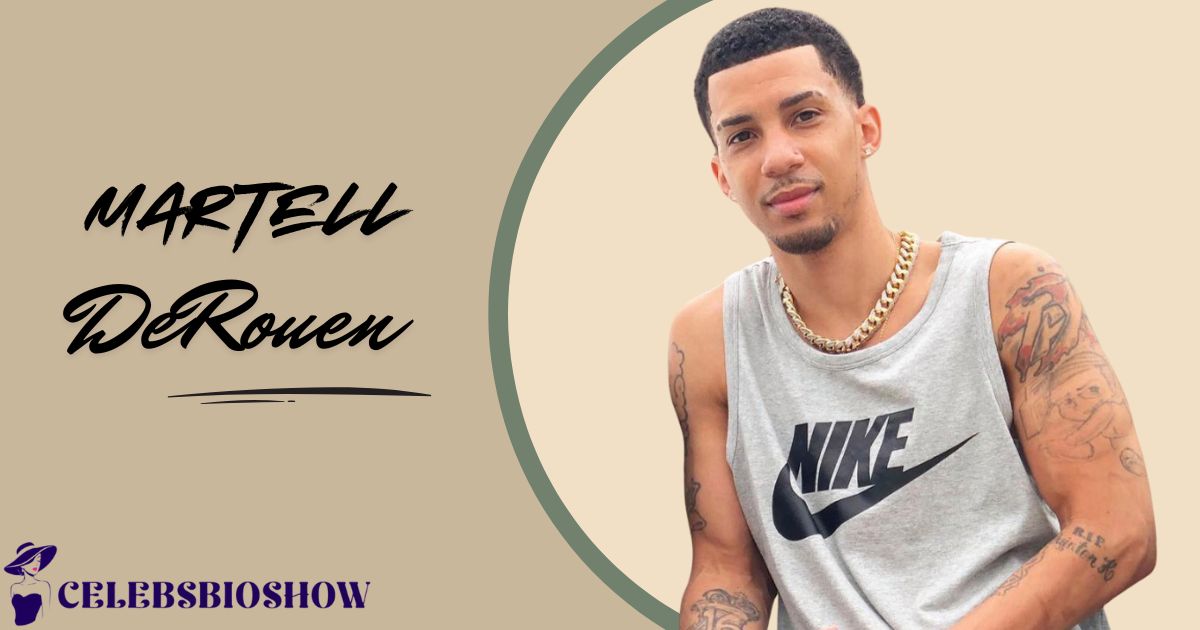
You scroll through your phone, eyes glazing over the usual mix of celebrity gossip and bad news, until a headline stops you cold. It’s not just another crime story; it’s one that hits you in the gut because of the sheer waste of it all. That’s the Martell DeRouen story. Maybe you clicked because you saw the name “Beyoncé.” Maybe you saw “murder.” But I’m asking you to stick around for the man himself, because his life was so much more than a footnote in a superstar’s biography or a tragic evening on the news.
Martell DeRouen wasn’t just some guy chasing fame. He was a disciplined airman, a lyricist who actually cared about his craft, a loyal friend, and a man whose life ended in a way that feels maddeningly preventable. When we really look at his path—from the high-security, high-pressure world of Air Force intelligence to the creative release of the recording booth—we find a narrative about ambition, quiet humility, and the devastating, often unspoken reality of toxic relationships.
Also Read: Heid Manning and Kelly Givens
Key Takeaways
- Service First: Martell served as a Senior Airman in the U.S. Air Force, handling sensitive work in the 93rd Intelligence Squadron at Lackland AFB.
- The Artist Kardone: He didn’t ride coattails; he secured his own distribution deal with a Sony subsidiary and worked with Texas legends like Paul Wall.
- Silent Ties: Yes, he was Beyoncé’s cousin, but he kept his mouth shut about it to earn respect on his own merits.
- A Preventable Tragedy: Martell was killed in January 2021 by Sasha Skare, a woman he tried to mentor and help.
- The Verdict: Justice came slow but heavy; Skare was convicted in 2023 and handed a 55-year sentence.
Who Was the Man Behind the Headlines?
It’s way too easy to slap the “rapper” label on a guy and let stereotypes fill in the blanks. But Martell DeRouen defies every single one of them. Talk to the people who actually broke bread with him, and you won’t hear words like “flashy,” “loud,” or “aggressive.” You hear “gentle.” You hear “humble.” One of his boys even described him as a “butterfly”—a dude who could float into a room and lift the vibe without needing to be the center of attention.
Born in Louisiana but claiming San Antonio as his stomping grounds, Martell had that specific kind of Southern grace that disarms you. He wasn’t trying to talk over you. He was listening. He was watching. That quiet observation likely made him a beast in his two very different careers: military intel and songwriting. In an industry where everyone is screaming “look at me,” Martell’s power was in his stillness. You didn’t need him to tell you he was solid; you just felt it.
Did You Know He Served in Air Force Intelligence?
Before he ever thought about dropping a mixtape, Martell DeRouen was lacing up combat boots and saluting officers. This chunk of his history often gets glossed over, but you can’t understand the man without it. He wasn’t just peeling potatoes; he was a Senior Airman attached to the 93rd Intelligence Squadron.
If you aren’t familiar with military structures, let me break that down. He was stationed at Lackland Air Force Base, right in the heart of San Antonio. The 93rd isn’t for slackers. It falls under the 543rd Intelligence, Surveillance, and Reconnaissance Group. These are the folks dealing with signals intelligence, cryptography, and the kind of data that keeps the country from falling apart. It requires a top-tier security clearance and a brain that can process complex patterns under pressure.
He took it seriously. Records from around 2009 show he was tapped for a promotion to Staff Sergeant (E-5). That doesn’t happen by accident. It happens because you show up, you lead, and you do the job right. He was even listed on base rosters helping out during the chaotic aftermath of the Fort Hood tragedy. That’s who he was—the guy who steps up when things go sideways. When you listen to his tracks as “Kardone,” listen closely. That precision? That discipline? That’s the Airman in him coming out on the beat.
How Did He Transition from Airman to Artist?
So, how do you pivot from a SCIF (Sensitive Compartmented Information Facility) to a recording studio? For Martell, music wasn’t a hobby he picked up to pass the time; it was a second calling. He adopted the persona Kardone and started grinding in the Texas hip-hop circuit.
And I mean grinding. He didn’t ask for handouts. His sound was a smooth cocktail of that dirty south rhythm and a lyrical delivery that felt polished, likely a result of his disciplined background. In 2016, he dropped a mixtape called “Trunk Bang.” The title tells you everything—it was made for riding slow with the bass rattling the rearview mirror. But he had a business mind, too. He managed to lock down a distribution deal with The Orchard, a Sony Music subsidiary. Do you know how hard that is for an indie artist? It’s nearly impossible without serious talent and business savvy.
He wasn’t playing pretend. He was in the studio with heavyweights. He cut a track called “100 Grand” with Paul Wall—the People’s Champ of Houston. He collaborated with Ray J on “Everywhere I Go.” These weren’t “pay-for-feature” vanity tracks; they were legitimate collaborations. He was building a legacy brick by heavy brick, proving that the name Kardone carried weight because of the work he put in, not because of who he knew.
What Was His Connection to Beyoncé?
Okay, let’s address it because I know you’re thinking about it. Yes, Martell was blood-related to Beyoncé Knowles-Carter. They were cousins through her maternal grandmother, Agnéz Deréon. In the clout-chasing world of the music biz, that connection is like holding a winning lottery ticket. Most people would have that printed on their business cards.
Martell? He barely whispered it.
Brian Mitchell, a studio owner who knew him well, told reporters that Martell actually hated bringing it up. “That’s not even something he would even mention to people,” Mitchell said. “We’d just have to put in his bios because it’s worthy to put it in there, but he doesn’t like stuff like that.”
Think about the character that takes. He could have opened so many doors just by making a phone call or dropping a name. Instead, he chose the hard road because he wanted the applause to be for him. He wanted you to feel his lyrics, not his lineage. It makes the loss sting even more, doesn’t it? He was doing everything the right way, building a foundation on solid rock, only to have it pulled out from under him.
Who Was Sasha Skare and How Did They Meet?
Every story has a villain, and in this one, her name is Sasha Skare. She was a young artist on the San Antonio scene, someone Martell encountered and decided to help. That was his nature—he wanted to see people win. He produced a single for her in April 2020. He was trying to be a mentor, a guide in a ruthless industry.
But lines got blurred. By the time he died, police described Skare as more than a mentee; she was involved in a personal relationship with him. Martell was separated from his wife, Joia DeRouen, at the time. They were still married, still deeply connected, but living apart while he chased his music dreams and she focused on her own life.
Skare wasn’t just a struggling artist; she brought chaos with her. She had a rap sheet, including charges tied to a violent incident in 2019 that left her boyfriend at the time dead and another man injured. Most people would run the other way. Martell didn’t. Maybe he thought he could save her. Maybe he thought he could help her turn that pain into art. It was a decision that cost him everything. The relationship turned toxic fast, filled with jealousy and possession—the kind of red flags that look like giant neon signs only after it’s too late.
What Happened on That Tragic January Night?
January 2021. It should have been a new start. Instead, a heavy silence fell over Martell’s apartment at The Towers at La Cantera. This wasn’t a cheap motel; it was an upscale spot, a safe haven. But safety is an illusion when you let the wrong person in.
Friends who were used to Martell’s reliable texts stopped hearing from him. The phone rang and rang. On January 26, the police finally showed up for a welfare check. They popped the door and found a nightmare. Martell was dead. A single gunshot wound.
The story that neighbors told was chilling. They recalled hearing a commotion days before the body was found. One neighbor painted a vivid, terrifying picture: a woman “banging on the door,” screaming for him to let her in. It breaks your heart to visualize it—a man retreating into his own home, locking the door to de-escalate a fight, only to be hunted down at his own threshold.
Then came the twist that makes your skin crawl. A 911 call was made, but not by Martell. A woman called, claiming to be his wife, Joia. But Joia was miles away. It was Skare. She allegedly impersonated his wife to the dispatcher, maybe to confuse the timeline, maybe to send cops on a wild goose chase. She used Joia’s name but stumbled on the details only a real wife would know. It wasn’t panic; it was calculation.
How Did the Manhunt and Arrest Unfold?
News hit the San Antonio streets like a bomb. Kardone was gone. The cops didn’t have to look far for a suspect; Sasha Skare was the only name that made sense. But she didn’t stick around to answer questions. She ran.
For weeks, she was a ghost. The story went national—partly because of the Beyoncé connection, partly because of the cold-blooded nature of the crime. The manhunt was on. Skare was eventually cornered and arrested, trading her aspiring artist dreams for a murder charge.
Her arrest was a relief, but it didn’t fix anything. Martell was still gone. His wife Joia, his parents, his sister—they were left holding the pieces of a shattered life, forced to wait for the slow-grinding wheels of the justice system to give them some answers. Was it an accident? Was it cold blood? They needed to know.
What Revealed the Truth During the Murder Trial?
Fast forward to August 2023. The trial of Sasha Skare was intense. She took the stand in her own defense, which is always a Hail Mary pass in a murder trial. She tried to spin a story of self-defense and tragic accident.
She told the jury they argued because Martell was jealous (a claim that didn’t sit right with anyone who knew his gentle nature). She said things got physical. Then she dropped her explanation for the gunshot: she claimed she was banging on the locked door with the gun in her hand, just trying to “get his attention,” when the gun magically went off, fired through the door, and killed him.
“My intent was just to get his attention,” she cried on the stand.
The prosecution wasn’t buying it. They tore that story apart. Banging on a door with a loaded firearm isn’t an “accident”—it’s an assault. The 911 call where she pretended to be Joia? That’s consciousness of guilt, plain and simple. An innocent person calls for help; a guilty person covers their tracks. They painted a picture of a woman scorned, an aggressor who refused to walk away, who fired through a door because she couldn’t handle being locked out.
The jury didn’t need long. They saw the footage. They heard the lies. Guilty of Murder.
What Was the Verdict and Aftermath?
Sentencing day was heavy. In Texas, they don’t play around with murder convictions. The jury handed down a sentence of 55 years. Sasha Skare, who wanted to be a star, will likely spend the rest of her relevant years in a cell.
The victim impact statements were the kind of thing that stays with you. Martell’s sister, Kami, stood up and looked Skare right in the face. She didn’t hold back. “The pain and agony you brought upon my family is unbearable,” she told her. It was raw, unfiltered grief.
Joia DeRouen took the stand too. Even though they were separated, you could feel the love she still had for him. She spoke about the tragedy of losing him just as they were figuring out their lives. The 55 years felt like justice, but as anyone who’s lost someone to violence knows, the gavel doesn’t bring them back. It just ends the legal chapter.
Why Does His Story Resonate So Deeply?
Why does this story stick in our throats? I think it’s because Martell shattered the stereotypes. He wasn’t living “that life.” He was a veteran. He lived in a nice apartment. He was a guy who tried to help someone up, and that hand was bitten.
It also forces us to look at something society likes to ignore: domestic violence against men. We don’t talk about it. We pretend it doesn’t happen. But here was a man who retreated, who locked a door to get away from a fight, and he was still killed. The aggressor was the one outside banging on the door. It’s a harsh reminder that toxicity doesn’t have a gender.
And finally, it’s the lost potential. Martell DeRouen served his country, honed his craft, and played by the rules. He had the talent and the discipline to go all the way. He just ran out of time.
Conclusion
Martell DeRouen was a hell of a lot more than a headline. He was Senior Airman DeRouen, the guy analyzing signals to keep you safe. He was Kardone, the artist pouring his soul into “Trunk Bang.” He was a son, a brother, and a husband.
When you think of him, forget the “Beyoncé’s cousin” tag. Remember the “butterfly” his friends talked about. Remember the quiet strength. Martell proved you don’t need to be the loudest person in the room to leave a mark. You just need to live with honor, create with passion, and treat people with decency. He went three for three.
Rest in power, Kardone.
Read more about the trial and the verdict here
FAQs – Martell DeRouen

Who is Martell DeRouen and what is his role in Louisiana politics
Martell DeRouen is a prominent Louisiana politician and the Mayor of Shreveport since 2020, known for his progressive policies and leadership in urban development and civic engagement.
What are some of Martell DeRouen’s key accomplishments as Mayor of Shreveport?
As Mayor, Martell DeRouen has focused on infrastructure improvements, economic growth, social justice initiatives, and city beautification projects, positively transforming Shreveport.
How does Martell DeRouen contribute to the Democratic Party?
DeRouen is a rising star in the Democratic Party, advocating for environmental sustainability, affordable housing, and justice reform, and supporting progressive policies in Louisiana.
What community efforts and charitable work is Martell DeRouen involved in?
He supports causes through the Martell DeRouen Foundation, serves on the United Way board, organizes drives for families in need, and mentors young community leaders.
What is known about Martell DeRouen’s personal life and background?
Born on June 15, 1982, in Shreveport, he is 42 years old, 6 feet 2 inches tall, married to Emily with two children, and comes from a family committed to service and leadership.