
I still remember the smell of the carpet in my living room in 1981. I was sitting way too close to the television—a massive wooden box with a screen that curved outward like a fishbowl—watching The Incredible Hulk. I wasn’t analyzing camera angles or lighting ratios back then. I was just terrified that David Banner was going to get caught before he could hitchhike out of town.
Years later, working in this industry, I started reading the credits. Really reading them. And one name kept popping up on the shows that defined my childhood: Patrick Boyriven.
He isn’t a name you see on flashy “Best Directors of All Time” lists. He doesn’t have a star on the Walk of Fame. But Patrick Boyriven is the kind of guy who actually built the entertainment industry. He was a French immigrant who navigated the sharks of Hollywood, a director who understood human emotion amidst monster chaos, and a producer who helped orchestrate one of the biggest sci-fi miniseries in history.
If you want to understand the texture of American television in the late 70s and early 80s, you have to understand Patrick Boyriven. He was the mechanic under the hood of the machine. Let’s strip away the glossy PR bio and look at the real career of a man who lived through the golden age of practical effects and network dominance.
Also Read: Baxter Neal Helson and Stephanie Sarkisian
Key Takeaways
- The French Connection: Boyriven brought a distinct European sensibility to rough-and-tumble American TV sets in the 70s.
- Mastering the Monster: His direction on The Incredible Hulk helped ground a comic book concept in genuine human tragedy.
- The Architect of V: As a producer on V: The Final Battle, he managed the logistics of a massive, budget-busting sci-fi allegory.
- Life in the Spotlight: His marriage to Mariette Hartley put him at the center of Hollywood’s social scene for nearly two decades.
- Versatility is King: He successfully pivoted from directing to producing, a rare survival skill in a notoriously fickle industry.
How does a French kid end up directing the Hulk?
Patrick Francois Boyriven was born in France in 1938. Stop and think about that year for a second. Europe was on the brink. He spent his earliest years in a country occupied by war and then rebuilding from rubble. That kind of start shapes a person. It gives you a perspective on chaos that you just don’t get growing up in the suburbs of Ohio.
We don’t know much about his schooling in Paris. He kept that close to the vest. But we know he came to America with ambition. Navigating Hollywood as an outsider in the 60s and 70s wasn’t easy. The industry was a closed shop, dominated by old-school networks and powerful unions. You didn’t just walk in and ask to direct a primetime show.
I’ve always admired the hustle it must have taken for him to break in. He didn’t start at the top. He worked his way into the Directors Guild of America (DGA), which is a fortress. By the time he landed The Incredible Hulk gig, he had already proven he could handle the pressure of a set. He wasn’t just an “artist”; he was a foreman. He could move a crew, make a day, and get the shot before the sun went down. That pragmatic, European efficiency likely endeared him to American producers who were bleeding money on slow shoots.
Why was his approach to The Incredible Hulk different?
The Incredible Hulk is a weird show. On paper, it’s silly: a guy turns green and throws foam rocks. But in execution, it was a tragedy. It was Les Misérables with purple pants.
Boyriven directed episodes like “Earthquakes Happen” (Season 1, Episode 11). I re-watched this recently, and the direction struck me. A lesser director would have focused entirely on the spectacle—the shaking ground, the falling debris. Boyriven focused on the sweat on Bill Bixby’s forehead.
He understood that the special effects of 1978 were… well, they were rough. If you lingered on the destruction too long, it looked fake. So, Boyriven kept the camera tight on the actors. He used the chaos of the earthquake to ramp up the claustrophobia.
There’s a scene where Banner is trapping himself to save others, knowing the Hulk is coming. Boyriven shoots it like a horror movie. The tension isn’t about the monster; it’s about the man losing control. That’s the secret sauce. Boyriven treated a comic book show like a serious drama. He respected the audience enough not to camp it up.
He also had to deal with the practical realities of “Hulking out.” Today, you just click a mouse. Back then? Boyriven had to coordinate a makeup change that took hours. He had to shoot Bixby, cut, wait for Lou Ferrigno to get painted green, match the lighting, and shoot again. It was a logistical nightmare. The fact that those episodes still hold up today is a testament to his patience and precision.
How did he manage the chaos of V: The Final Battle?
If The Incredible Hulk was his directing showcase, V was his producing masterclass.
By the early 80s, Boyriven had shifted gears. He moved into producing, taking an Associate Producer credit on the original V miniseries (1983) and a Co-Producer credit on the sequel, V: The Final Battle (1984).
Let’s be clear: V was insane. It was NBC’s attempt to do Star Wars meets The Man in the High Castle on a TV budget. You had hundreds of extras, lasers, alien makeup, massive mothership sets, and a plot about lizard fascists eating rodents.
As a producer, Boyriven wasn’t just sitting in a chair smoking a cigar. He was in the trenches. His job was to keep the train on the tracks. In the 80s, practical effects were expensive and slow. If a lizard mask ripped, production stopped. If the laser blast pyrotechnics didn’t go off, you lost half a day resetting.
Boyriven had to balance the creative vision of Kenneth Johnson (the creator) with the budget demands of the network. The Final Battle had a darker, more desperate tone than the original. It was a war story. Boyriven helped steer that ship. He ensured that despite the sci-fi trappings, the show felt grounded. The gritty, dusty look of the resistance hideouts? The sweaty, desperate planning sessions? That’s the producer making sure the money is spent on texture and atmosphere, not just flashy lights.
What was it like being Mr. Mariette Hartley?
We have to talk about the marriage. In the Hollywood of the late 70s, Mariette Hartley was royalty. She had won an Emmy. She was famous for those snappy Polaroid commercials with James Garner that were so convincing everyone thought they were actually married.
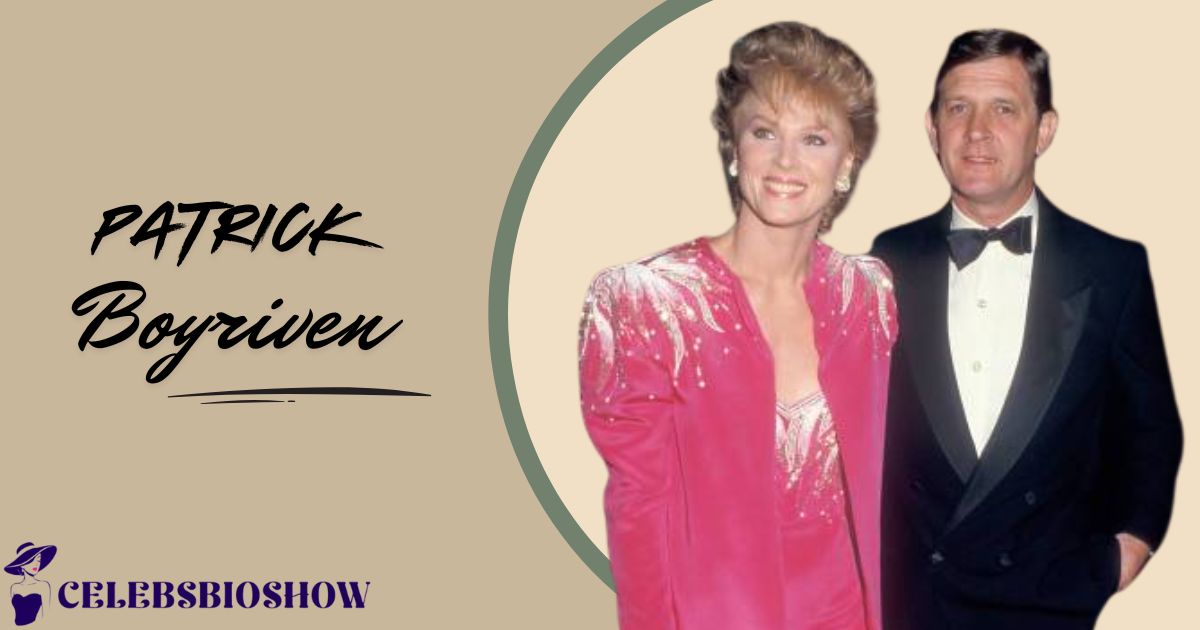
Patrick Boyriven married her on August 13, 1978. Suddenly, the French director was half of a power couple.
I’ve read old interviews from that era. It paints a picture of a classic Hollywood life—parties in the Hills, industry events, navigating the public eye. But it also seemed surprisingly grounded. They had two kids, Sean and Justine. They weren’t tabloids fodder in the way modern stars are. They were working professionals.
There’s an interesting dynamic when both spouses are in the trade. Hartley was in front of the camera; Boyriven was behind it. They spoke the same language. They understood why a 14-hour day was necessary. They understood the stress of pilot season.
But Hollywood is brutal on marriages. The pressure is relentless. After 18 years, they divorced in 1996. It’s a lifetime in this town. While the marriage ended, that era of their lives defined them both. Boyriven wasn’t just a “husband of”; he was a peer. He directed her in projects. They collaborated. It was a creative partnership as much as a romantic one.
Why switch from Directing to Producing?
I see this transition a lot, and I always respect it. Directing is exhausting. You are the first one there and the last one to leave. You answer 5,000 questions a day. “Blue shirt or red?” “Lens flare or matte?” “Can we cut this line?”
Producing is a different kind of stress. It’s strategic.
Boyriven’s move to producing in the 80s shows he was smart. He saw where the industry was going. Directors are hired guns; producers own the process. By becoming a producer on hits like V, he secured more control and likely better financial stability.
It also speaks to his personality. Directing requires a singular ego. Producing requires diplomacy. You have to tell the director “no” without making them quit. You have to tell the network “yes” while figuring out how to do it for half the money. The fact that Boyriven thrived in both roles tells me he had a rare combination of artistic eye and business brain.
What happened to Patrick Boyriven after the 90s?
This is the question I asked myself when I started digging. After the mid-90s, Boyriven’s credits thin out. He directed The New Adventures of Robin Hood in 1997—a fun, campy syndicated show—but then the trail goes cold.
Why?
I think the industry changed. The 90s saw a shift to digital. The old guard of practical effects directors and producers found themselves in a new world of CGI and fast-paced, shaky-cam editing. Or maybe he just had enough.
After 30 years of waking up at 4 AM to drive to a studio lot, maybe he wanted to just be Patrick. We often demand that our artists work until they drop dead. But there is dignity in walking away. There is success in saying, “I made my mark, I made my money, and now I’m going to enjoy my life.”
He has kept a very low profile in the 21st century. No Twitter rants. No “tell-all” books. Just silence. I respect that immensely. In an age where everyone is screaming for attention, Boyriven’s silence feels like the ultimate power move.
Why does his work still matter?
You might ask, “Why should I care about a guy who directed TV shows 40 years ago?”
Because he built the foundation.
Look at the Marvel Cinematic Universe today. Look at the endless Star Wars shows on Disney+. They all stand on the shoulders of guys like Boyriven. He proved that you could put a superhero on TV and make adults cry. He proved that a sci-fi miniseries could get Super Bowl-level ratings.
When I watch modern CGI fests, I miss the texture of Boyriven’s work. I miss the real stunts. I miss the way he lit a scene with actual shadows. His work had a weight to it that digital pixels just can’t replicate.
The Verdict
Patrick Boyriven was a craftsman. That’s the best word for him. He wasn’t trying to be an auteur. He wasn’t trying to change the history of cinema. He was trying to make a damn good hour of television. And he did it, over and over again.
He represents a specific time in Hollywood—a time of practical magic, of network dominance, and of storytelling that relied on actors rather than algorithms. Whether he was guiding Bill Bixby through a tragic transformation or managing the alien invasion of Los Angeles, Boyriven was a steady hand on the wheel.
So, the next time you see that green monster roar, or see a red “V” spray-painted on a wall, tip your hat to the Frenchman behind the camera. He helped make it happen.
For a deeper dive into the golden age of television history, check out the archives at the Paley Center for Media.
FAQs – Patrick Boyriven
Who was Patrick Boyriven and what was his significance in television?
Patrick Boyriven was a French immigrant who became a key figure in American television during the late 70s and early 80s, known for his roles as a director and producer of influential shows like The Incredible Hulk and V: The Final Battle.
How did Patrick Boyriven’s European background influence his work in Hollywood?
Boyriven’s European upbringing, especially growing up in France during wartime, gave him a unique perspective on chaos and resilience, which he applied to his pragmatic and efficient approach to directing and producing television.
What was unique about Boyriven’s directing style on The Incredible Hulk?**
Boyriven’s direction focused on grounding the show’s fantastic elements in human emotion, using tight shots on actors and creating tension that emphasized drama over spectacle, which helped the show resonate on a deeper level.
Why did Patrick Boyriven transition from directing to producing?**
Boyriven’s shift to producing was driven by his strategic understanding of the industry, allowing him to gain more control, stability, and influence over projects like V, which required managing budgets, logistics, and creative vision.
What is Patrick Boyriven’s legacy in television today?**
Boyriven’s legacy lies in laying the groundwork for modern superhero and sci-fi television, demonstrating that with craftsmanship and storytelling, even low-budget TV could evoke genuine emotion and captivate audiences, influencing today’s blockbuster franchises.