

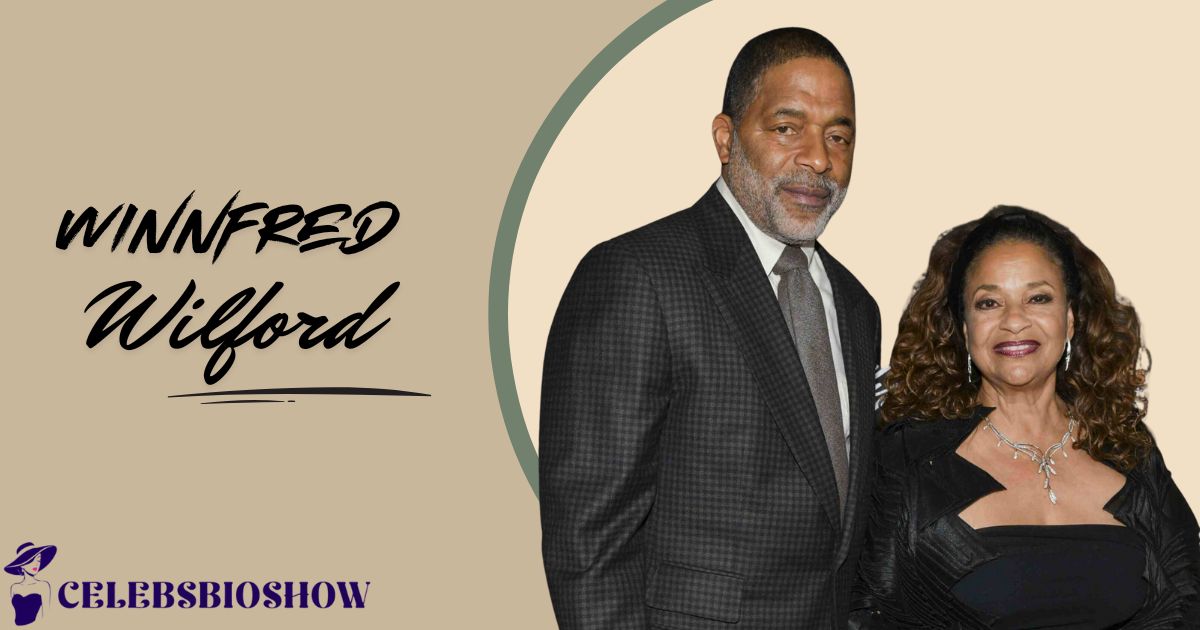
The 70s and 80s were loud. The clothes were loud, the music was loud, and the personalities were even louder. We usually fixate on the people holding the microphone—the Jacksons, the LaBelles, the Vandrosses. But I’ve always been the guy watching the edge of the frame, looking for the suits who actually cut the checks and booked the flights. Winnfred Wilford was one of those guys. Most people just nod and say, “Oh yeah, Debbie Allen’s first husband,” and keep moving. That’s a mistake. You don’t get from a segregated Baton Rouge classroom to a VP office at CBS Records just by being someone’s husband.
Winnfred, or “Win” to the people who actually knew him, wasn’t just hanging around the VIP section; he built the VIP section. He ran Publicity and Artist Affairs for Epic Records back when the industry was essentially the Wild West with expense accounts. Before that, he was breaking color barriers as a model when most agencies wouldn’t look twice at a Black man. His life wasn’t a neat, straight line up a corporate ladder. It was a scramble, a hustle, and a masterclass in style.
If you care about how Black executives carved out space in corporate America before it was “inclusive,” you need to know this story. It’s about more than just music. It’s about a guy who walked into rooms where he wasn’t expected, sat down, and made himself comfortable.
Also Read: Heidi Ufer and Juanita Wilkinson
Key Takeaways
- He kicked down the modeling door: Long before he was a suit, Wilford was one of the first Black men signed to the massive Ford Modeling Agency.
- He ran the show at Epic: As Vice President of Publicity and Artist Affairs, he managed the images of superstars during the label’s golden era.
- He was half of a serious power couple: His marriage to Debbie Allen from 1975 to 1983 put him right in the center of the NYC-to-Hollywood cultural shift.
- He never stopped coaching: Even after leaving the high life, he went back to Louisiana and spent years mentoring young, unsigned artists who had nothing but a demo tape and a dream.
- He reinvented himself constantly: From runway model to record exec to newspaper columnist, the man refused to stay in one box.
Who was the guy behind the famous name?
It’s easy to get lost in the shadow of a spouse like Debbie Allen. She’s a force of nature. But Win Wilford was holding his own long before they met. Born March 8, 1939, in Baton Rouge, he was a Southern boy through and through. His parents, Mollie and Louis, raised him in a community where you knew your neighbors and you went to church on Sunday.
But Baton Rouge in the 40s and 50s wasn’t exactly overflowing with opportunities for a young Black kid with big dreams. The ceiling was low, and it was made of concrete. He went to the Southern Lab School and Southern University, places that taught him he was worth more than what society was telling him. I always wonder what that moment looks like—the second you decide that “here” isn’t enough. For Win, that moment pushed him North.
Friends called him “Woggie.” It’s one of those nicknames that tells you he was beloved, the kind of guy who could disarm you with a laugh. He didn’t just have ambition; he had charm. And in the entertainment business, charm is a weapon. You can be smart, but if people don’t want to have a drink with you, you’re dead in the water. Win knew how to work a room, a skill that would eventually take him from posing for cameras to directing them.
How hard was it to break into modeling back then?
Try explaining to a kid today that a Black face on a billboard used to be a radical political statement. They won’t get it. But in the 60s? The modeling world was a fortress, and the drawbridge was up. Win Wilford didn’t care. He got himself signed to the Ford Modeling Agency.
We aren’t talking about some small-time catalogue work here. Ford was the agency. Eileen Ford didn’t sign people out of charity; she signed them because they had “it.” For a Black man to land on her roster in that era meant he had to be undeniable. He had to be twice as good to get half the work.
That experience taught him something vital: image is currency. He learned how to sell a feeling without saying a word. Later, when he was sitting in marketing meetings at Epic Records trying to figure out how to break a new R&B act, he wasn’t just guessing. He knew what “star quality” looked like because he’d been paid to embody it. He understood that before the public hears the music, they see the artist.
How did he end up at “Black Rock”?
The jump from modeling to the music business makes sense if you think about it. Both run on cool. After soaking up the energy of NYC and Philly, Wilford transitioned to the business side. He landed at CBS Records—specifically the Epic subsidiary.
CBS was the Empire. They called their headquarters “Black Rock” because of the dark granite cladding, but inside, the power structure was overwhelmingly white. Yet, the 70s saw a shift. Labels realized they were leaving money on the table by ignoring Black audiences. Enter the “Special Markets” division.
It sounds patronizing now—”Special Markets”—but back then, that was the war room. That’s where the real work was happening. Wilford rose to Vice President of Publicity and Artist Affairs in this division. He was the guy fighting for column inches in magazines that didn’t usually cover Black artists. He was the one arguing that his acts deserved the full promotional push, not just a few spins on urban radio. He wasn’t just pushing paper; he was pushing for respect.
Did he really shape the sound of the era?
A VP of Publicity is like a ghost. If they do their job right, you never see them, but you see their artist everywhere. Wilford was operating at Epic during a perfect storm of talent. The label was pivoting from rock to becoming a juggernaut of R&B and Pop.
I dug into some old guest books and forums to see what people actually said about him, and the stories are telling. A musician named Jerome Mitchell talked about meeting Win while working with funk legend Bernie Worrell. Mitchell said Wilford “gave me a blueprint” and actually believed in what he was doing. That’s rare. Most execs look right through you if you don’t have a hit single in your pocket.
Another group, “Au Naturel,” mentioned that Win produced a demo for them. The label didn’t pick it up—happens all the time—but Win didn’t ghost them. He stayed in touch. He gave advice. He remained a mentor for years. That tells me he actually loved the music. He wasn’t just a corporate robot crunching quarterly numbers; he was a fan who wanted to see people win.
What about the big names?
While the archives don’t give us his daily calendar, look at the roster. The late 70s at Epic? You’re talking about the Jacksons post-Motown. You’re talking about Labelle. You’re talking about the machine that would eventually launch Luther Vandross.
Win was in the room where the decisions were made on how to sell these icons to America. His modeling background had to be his ace in the hole here. He knew that for a Black artist to cross over to the Pop charts—which was the holy grail for the bean counters—they needed to look impeccable. They needed a story. Win was the storyteller.
How did he and Debbie Allen happen?
New York in the 70s was a small town if you were in the arts. Everybody knew everybody. Win met Debbie Allen when she was grinding on the Broadway circuit, reportedly during the run of Raisin.
Think about the optics. He’s the smooth, successful record exec with the Ford model looks. She’s the fiery, brilliant dancer who can act her face off. It makes perfect sense. They got married in 1975.
I love this pairing because it feels like a merger of two superpowers. She brought the raw, creative fire; he brought the corporate stability. Allen has said in interviews that when he proposed, he told her he wanted to “take care of her.” For a struggling artist in a brutal city, that’s not a small thing. He offered a foundation she could launch from.
What was life like as a power couple?
For eight years, they were the couple to watch. They hit the red carpets, the gallery openings, the industry bashes. This was right before Fame turned Debbie into a global household name.
Wilford wasn’t just carrying her purse. He was a heavy hitter at CBS. They were navigating a world that was glamorous but also exhausting. Late nights, travel, egos—it’s a lot for any marriage to sustain. But by all accounts, they looked good doing it. They represented a kind of Black aspiration that was just starting to be seen on a massive scale.
Why did it fall apart?
Divorce is usually a slow leak, not a blowout. They split in 1983. Look at the timeline: 1982 was when Fame the TV series exploded. Debbie Allen wasn’t just a Broadway dancer anymore; she was Lydia Grant. She was in every living room in America. That job demanded she be in Hollywood, working 16-hour days.
Win’s world was still largely anchored in the New York music scene. You have two shooting stars, but they’re moving in different orbits. The bicoastal thing is a relationship killer. Plus, people change. The person you marry at 25 isn’t always the person you need at 33.
After the split, Debbie married Norm Nixon and started a new chapter. Win? He did something classy. He kept his mouth shut. He didn’t run to the tabloids to spill dirt on his famous ex-wife. He just went back to work. There’s a dignity in that silence that I really respect.
Where did he go after the lights dimmed?
American lives often have a second act, and Win’s took him back to where he started. He eventually left the rat race of New York and moved back to Baton Rouge. His health was a factor—it usually is—but he didn’t go home to die. He went home to live.
He started writing a column for the Baton Rouge News Leader called “New York and Other Points.” Isn’t that perfect? He became the bridge. He was taking all that wisdom, all those crazy stories from the CBS boardroom and the fashion runways, and bringing them back to his community.
He reconnected with his roots. He had a wife, Saundra, who was with him until the end. He was surrounded by family. He wasn’t the “ex-husband of a star” down there; he was just Win.
Did he keep his hand in the game?
Here’s the thing about music guys—they can never fully turn it off. When Win passed away in February 2019, the tributes weren’t just “Rest in Peace.” They were specific.
People wrote about him listening to their terrible demos and finding something good to say. They wrote about his laugh. They wrote about how he continued to act as a manager and publicist for local Baton Rouge artists who had zero shot at a major label deal but deserved to be heard anyway.
That’s the legacy right there. It’s not the platinum plaques on the wall at Epic. It’s the fact that he treated a kid with a dream in Louisiana with the same respect he treated a superstar in New York. He was a mentor until the clock ran out.
What should we remember about Winnfred Wilford?
Winnfred Wilford lived a life that most people only see in movies. He walked runways when it was impossible. He sat in power meetings when it was unlikely. He loved a legend.
But don’t remember him just for the resume. Remember him for the style. Remember him for the fact that he navigated incredibly white spaces without losing his blackness. He showed that you could be from the South, conquer the North, and come back home with your soul intact.
To the history books, he might be a footnote in Debbie Allen’s biography. But to the people who were paying attention? He was the main character of his own incredible story.
If you want to really dig into the guys who built this industry, check out the Archives of African American Music and Culture. They have the receipts on all the executives who made the music business what it is.
FAQs – Winnfred Wilford
Who was Winnfred Wilford and why is he significant in music and entertainment history?
Winnfred Wilford was a pioneering Black executive in the music industry, known for breaking racial barriers as a model, managing publicity for Epic Records, and mentoring artists. His life exemplifies resilience and influence beyond his marriage to Debbie Allen.
How did Winnfred Wilford break into modeling during the 1960s?
Wilford broke into modeling by signing with Ford Modeling Agency, which was a significant achievement at the time for a Black man, helping him embody the image of star quality that opened doors in the entertainment industry.
What role did Winnfred Wilford play at CBS Records, specifically at Epic?
Wilford served as Vice President of Publicity and Artist Affairs at Epic Records, where he fought for proper promotion of Black artists and helped shape the image of major acts during a pivotal era for the label.
What was Winnfred Wilford’s relationship with Debbie Allen and how did it influence his career?
Wilford was married to Debbie Allen from 1975 to 1983, forming a power couple that connected the worlds of Broadway, television, and music, and enhancing his influence within the industry.
What is Winnfred Wilford’s legacy beyond his professional achievements?
His legacy lies in his style, resilience, and ability to navigate white-dominated spaces while maintaining his racial identity, and his mentorship and impact on artists in his community, exemplifying integrity and dedication.