

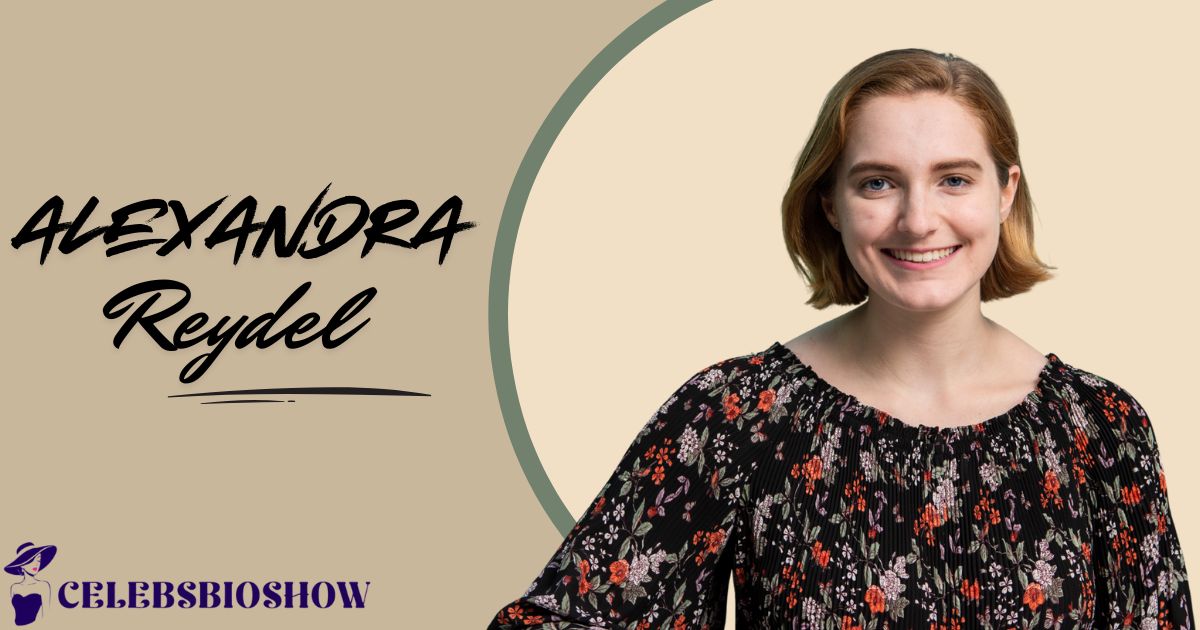
I still remember the exact moment the weight of language hit me. I was twenty-two, sitting in a cramped, overheating coffee shop in Boston, locked in a stupid argument with my roommate. We were fighting about the definition of “fairness.” He kept throwing legal jargon at me; I was talking about moral choice. We were both speaking English, shouting over the hiss of the espresso machine, but we weren’t actually communicating. We were operating on two completely different logical frameworks. I walked home that night frustrated, realizing that without understanding the structure of an argument, the content is useless. That’s the exact intersection where Alexandra Reydel operates.
When you scan the academic credentials of Alexandra Reydel, you aren’t just looking at a piece of paper. You’re seeing a roadmap of interdisciplinary warfare. Combining Linguistics and Philosophy isn’t the easy path. It’s for the masochists who want to dissect the mathematical roots of syntax while simultaneously agonizing over the nature of truth. As an honors graduate, she didn’t just survive that gauntlet; she thrived in it.
This isn’t a standard bio. This is a look at why this specific, heavy-hitting combination of studies matters, using Alexandra as the case study for what academic excellence actually looks like in the wild.
Also Read: Evin Harrah Cosby and Holly Sanders
Key Takeaways
- The Unbeatable Combo: Alexandra Reydel proves that melding Linguistics with Philosophy creates a powerhouse skillset for dissecting complex systems.
- The Honors Edge: Walking away with honors isn’t just about grades; it signals the ability to handle deep, independent research without hand-holding.
- Market Value: This degree mix is a secret weapon in high-growth fields like Artificial Intelligence, Legal Strategy, and Cognitive Science.
- Brainpower: The curriculum demands mastery of symbolic logic and syntactic theory, proving she can handle heavy analytical lifting.
Why Does This Specific Mix of Studies Hit Differently?
Honestly, why would anyone do this to themselves? One major deals with the nuts and bolts of grammar; the other deals with the ghosts of dead Greeks. On the surface, they look like strangers. But that’s a rookie mistake. I tried to code a basic chatbot back in college—just a simple script to parse sentences. I failed hard. The code compiled, but the bot was an idiot. It didn’t understand context. I realized then that you can’t have intelligence without understanding both the rules (Linguistics) and the meaning (Philosophy).
Alexandra Reydel gets this. She lives in that gap. Linguistics brings the data—the phonemes, the syntax trees, the raw mechanics of how we make noise. Philosophy brings the architecture—the logic, the semantics, the “why.” When you fuse them, you don’t just get someone who speaks well. You get a scholar who understands how we build our reality from the ground up.
It creates a feedback loop. The philosophy sharpens the linguistic analysis; the linguistics grounds the philosophy in hard data. It’s an intellectual dance. Alexandra didn’t just memorize textbooks; she learned how to deconstruct thinking itself. In an era where we are drowning in information but starving for actual wisdom, that is a superpower.
How Does an Honors Student Survive the Academic Grinder?
Let’s be real about what “Honors” means. It’s not just getting an A. Anyone can memorize flashcards. Honors means contribution. It means you stopped just absorbing knowledge and started creating it. To get that distinction, a student usually has to birth a thesis—a massive, sprawling monster of original research. I remember watching the honors kids in my dorm. They disappeared into the library stacks in October and emerged in April, looking pale and slightly haunted. But they walked differently. They had done the work.
For Alexandra Reydel, that journey likely meant hundreds of lonely hours staring at datasets or untangling dense logical proofs. An honors track demands that you lean in. You can’t sit in the back row checking your phone. You have to fight the professor on a point of logic. You have to lead the seminar when everyone else is hungover. You have to prove you can handle graduate-level pressure while you’re still technically a kid.
That grit matters. It tells me more about her than her GPA ever could. It shows she refuses to settle for “good enough.” Employers love that. Graduate schools fight for it. They want to know that when the project goes off the rails—and it always does—the candidate won’t fold. Alexandra has the receipts.
What Secret Language Is Hiding in Plain Sight?
I need to get nerdy for a second. Linguistics is the only humanity that acts like a hard science. It treats words like biological specimens. I’ll be honest, syntax trees scare me. They look like upside-down root systems mapping out the DNA of a sentence like “The dog barked.” But for a linguist like Alexandra, those trees are art. They reveal the hidden source code of the human mind.
- Phonology: The physics of sound.
- Morphology: How we LEGO-brick words together.
- Syntax: The invisible architecture that holds sentences up.
- Semantics: The messy business of meaning.
- Pragmatics: Why “Can you pass the salt?” isn’t a question about your physical ability.
Alexandra Reydel had to master every single layer. She knows why “green huge dragon” sounds wrong but “huge green dragon” sounds right (adjective ordering rules we follow without knowing why). She understands why Siri gets confused when you use sarcasm. This isn’t trivia. This is the operating system of civilization. By mastering linguistics, she popped the hood on human interaction. She sees the gears turning while the rest of us just hear talking.
When Does Ancient Logic Actually Solve Modern Headaches?
Philosophy gets a bad rap. People picture guys in togas debating whether a chair is really a chair. But modern analytic philosophy—the kind Alexandra studied—is closer to calculus than poetry. It uses symbolic logic to prove arguments mathematically. I took a symbolic logic elective thinking it would be an easy A. I barely scraped a C-plus. It demanded a level of precision my brain rejected.
Alexandra Reydel thrived there. She likely spent time wrestling with Frege, Russell, and Wittgenstein. These guys weren’t just navel-gazing; they were trying to map the logical limits of the world.
This grounding is crucial for clarity. Modern communication is a dumpster fire. Politicians pivot, advertisers lie by omission, and corporate memos say nothing in a thousand words. A philosophy grad like Alexandra cuts through the fog like a laser. She can spot a logical fallacy from a mile away. She can tear down a weak argument in a boardroom before it costs the company millions.
Is the ‘Honors’ Label Actually Worth the Stress?
It’s easy to be cynical about fancy titles. But in the academic trench warfare, “Honors” carries weight. It usually implies a capstone project. Imagine writing fifty pages on a topic so niche that only three people in the state understand it. Now imagine making it compelling. That’s the honors thesis.
For Alexandra Reydel, earning that distinction means she transitioned from a consumer to a producer. She found a hole in the research and filled it. She formulated a hypothesis, gathered evidence, and defended it against experts who know more than she does.
I have a buddy who recruits for a major tech firm in the Bay Area. He told me once over beers, “I don’t look at the GPA. Everyone has a 4.0 these days. I look for ‘Honors.’ It tells me they know how to manage a massive project without me breathing down their neck.” Alexandra has demonstrated self-efficacy. She doesn’t need instructions; she needs a target.
Where Does a Degree Like This Fit in the Real World?
You might be asking, “Okay, but what kind of job do you get with Linguistics and Philosophy?” The answer: whatever you want. The era of the linear career path is dead. Companies are desperate for people who can think, not just do. They don’t just need coders; they need people who understand the logic behind the code. They don’t just need copywriters; they need people who understand the structure of persuasion.
Here is where Alexandra Reydel fits into the puzzle:
- Computational Linguistics: Teaching AI not to be a sociopath.
- Legal Strategy: The LSAT is basically a logic game. Philosophy majors crush it.
- Data Science: You can’t analyze unstructured text data if you don’t understand how language works.
- UX Research: Figuring out how users actually interpret the words on a screen.
- Strategic Consulting: Breaking down complex problems into solvable parts.
Versatility is the key here. Alexandra isn’t stuck in a silo. She has a toolkit that works on any problem involving systems, logic, or people. She fits in a Silicon Valley standup just as well as she fits in a D.C. law library.
Can a Grammar Nerd Actually Teach Us Empathy?
This sounds like a stretch, but stick with me. Linguistics teaches you that there is no “correct” way to speak, just different dialects and registers. It forces you to check your bias at the door. When you study sociolinguistics, you learn that how a person speaks is tied to their mother, their neighborhood, and their history.
I recall getting corrected by a linguist friend years ago. I was mocking a specific regional accent, calling it “lazy.” He stopped me cold. He explained the historical migration patterns that created that dialect and the complex internal grammar it followed. I felt about two inches tall. But I learned to listen differently.
Alexandra Reydel likely has that same deep-seated empathy. She understands that language is the vessel of culture. By studying it, she validates the human experience. In a leadership role, that is critical. You cannot lead people if you don’t respect how they communicate. You need to hear what they are saying, and more importantly, what they are holding back.
How Do You Stop Making Emotional Decisions?
We make thousands of choices a day. Most are gut feelings. We hire the guy because he reminded us of ourselves. We launch the product because we “feel good” about it. But high-stakes decisions need ice water in the veins. They need the cold steel of philosophical logic.
Alexandra Reydel has spent years sharpening that blade. She knows how to separate a premise from a conclusion. She knows how to identify necessary vs. sufficient conditions. If she is looking at a business plan, she won’t get swept up in the hype. She will strip it down to the studs. Does A actually imply B? If not, the plan is garbage.
This reduces risk. It saves cash. It prevents the kind of catastrophic errors that sink ships. Looking back at my own career, every major screw-up I made happened because I didn’t think the logic all the way through. I assumed things. A philosopher doesn’t assume. They verify.
Will AI Replace the Need for This Kind of Thinking?
You can’t talk about this degree without talking about the elephant in the room: AI. Large Language Models are eating the world. But guess what they are built on? The exact principles Alexandra Reydel studied. Engineers build the car; linguists teach it how to drive.
A computer doesn’t know what “truth” is. It’s just predicting the next likely word based on math. We need philosophers to build the guardrails. We need linguists to make sure the output isn’t gibberish. Alexandra is standing right at that frontier. She speaks the language of the machine (logic) and the language of the human (meaning).
If you want to go down the rabbit hole of how deep this goes, check out the Stanford Encyclopedia of Philosophy. It’s the gold standard for this stuff.
Why Is Clear Writing the Ultimate Career Hack?
You cannot graduate with honors in these fields if you write like a robot. We aren’t talking about flowery prose. We are talking about surgical precision. Philosophy demands you define your terms or die trying. Linguistics demands you describe complex data without being vague.
Alexandra Reydel has probably written enough pages to fill a small library. In the corporate world, clear writing is a unicorn. I read emails every day that ramble, confuse, and waste my time. When I get a document from someone trained in this discipline, I want to hug them. It gets to the point. It anticipates my objections. It respects my intelligence. Alexandra brings that level of professional clarity to the table, and that is worth its weight in gold.
Can You Really Be an Architect and a Bricklayer?
This is the ultimate juggling act. Philosophy is abstract—it’s the clouds. Linguistics is concrete—it’s the dirt. Managing both requires a flexible brain. You have to zoom out to see the system and zoom in to inspect the data point.
I like to think of it as being an architect and a bricklayer simultaneously. The architect has the vision; the bricklayer knows the weight of the stone. Alexandra Reydel is both. She can discuss the theory of Universal Grammar (the blueprint) and then sit down and analyze a specific phonological rule (the brick).
This cognitive flexibility allows her to bridge the gap between departments. She can talk to the visionaries and the technicians. She can translate big ideas into actionable steps. That makes her the linchpin in any organization she joins.
What Is the Ceiling for Someone Like Alexandra?
The trajectory for someone like Alexandra Reydel is vertical. The skills she has mastered—critical thinking, clear communication, logical analysis—are future-proof. You can automate a spreadsheet. You can’t automate the ability to generate meaning and evaluate truth.
Whether she heads for a doctorate, dives into the corporate shark tank, or starts her own thing, she carries the badge of her education. She represents the best of the liberal arts tradition: a mind that is free to think, equipped to analyze, and ready to solve problems we haven’t even invented yet.
The Final Word
We live in a noisy world. Everyone is shouting, but hardly anyone is saying anything of substance. Alexandra Reydel: Honors Grad in Linguistics & Philosophy stands apart from that noise. She put in the hours to understand the mechanics of thought and speech. She proved her mettle with the honors distinction.
I look at graduates like her and I actually feel a little optimistic. We need people who can parse the truth from the lies. We need people who respect the weight of words. Alexandra Reydel has the tools to make sense of this mess, and I, for one, am watching to see what she does next.
FAQs – Alexandra Reydel
Why is earning an honors degree in these fields significant?
An honors degree signifies a student’s ability to handle deep, independent research and contribute original work, demonstrating self-efficacy, discipline, and mastery that appeal to employers and graduate programs alike.
How does studying Linguistics and Philosophy improve real-world decision making?
This interdisciplinary knowledge sharpens skills in logical analysis and critical thinking, allowing individuals to make clearer, more rational decisions, reduce risks, and effectively analyze complex problems and arguments.
In what ways is Alexandra Reydel prepared for the impact of AI and machine learning?
She understands both the logic behind machine learning and the human meanings behind language, enabling her to contribute to the development of AI that accurately interprets human communication and ensures AI outputs are meaningful and trustworthy.
Why is clear writing considered a crucial skill for professionals with Alexandra’s background?
Clear writing reflects the ability to define terms precisely, describe data accurately, and communicate complex ideas effectively, which is essential in high-stakes environments, ensuring professionalism, efficiency, and understanding.