

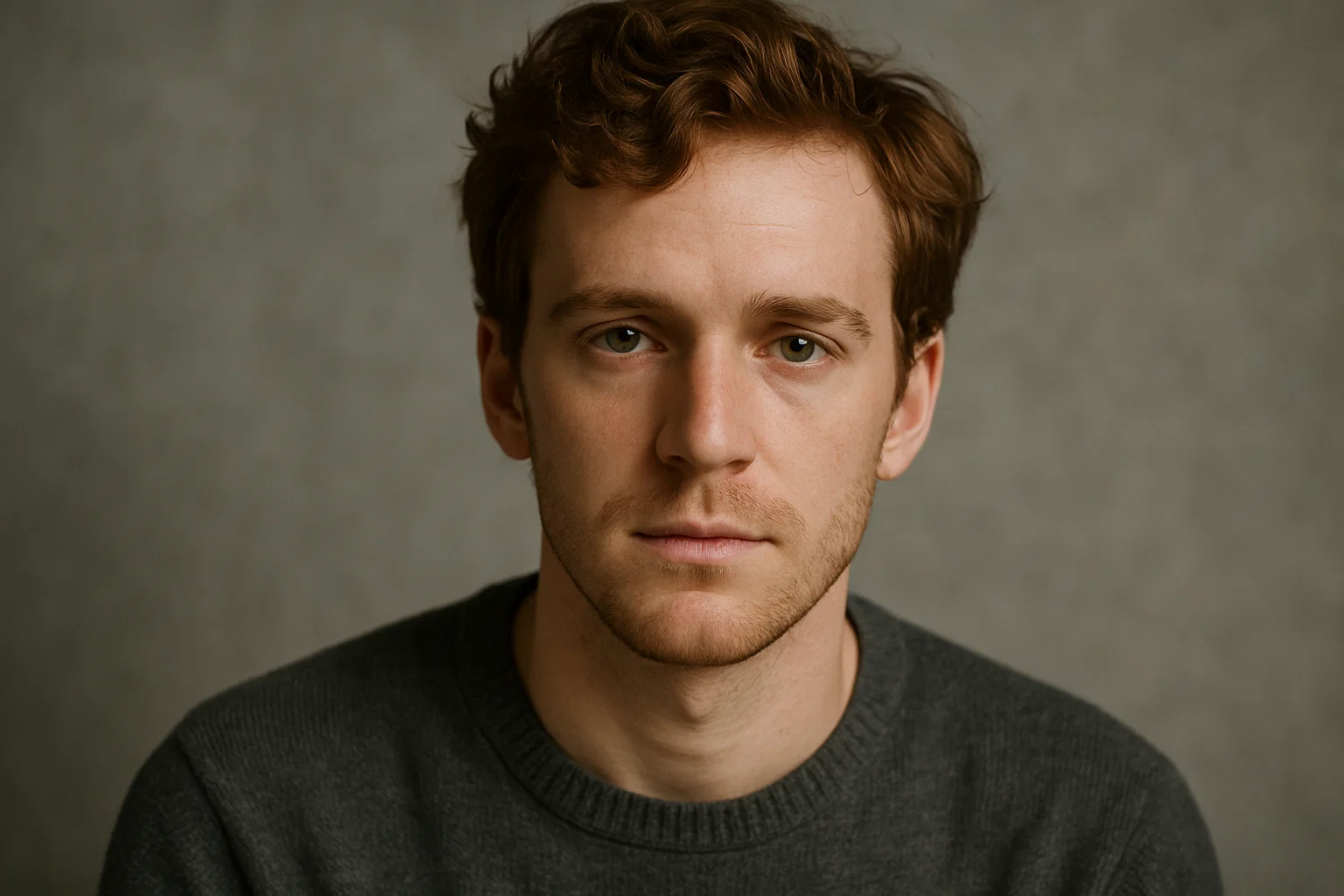
You’ve seen him. Maybe you didn’t catch the name in the credits the first time, but you definitely felt the shift in the room when he walked on screen. He’s that guy—the one stealing scenes in high-stakes dramas, the actor bringing a terrifying, quiet level of vulnerability to the stage, and the rising star everyone in the industry seems to be whispering about. We’re talking about Edmund Donovan. In a media landscape cluttered with instant influencers and fleeting TikTok fame, Donovan feels different. He feels like a throwback. He reminds me of the actors from the 70s who treated this job like a trade, not a lifestyle brand.
I remember the first time I saw his name pop up in a playbill for Greater Clements. It wasn’t with fanfare. But two hours later, I walked out of that theater feeling like I’d been hit by a truck. That is the Edmund Donovan effect. He burrows under your skin. Whether you know him from his gritty work in Hightown, his unnerving presence in Civil War, or the stage performances that have literally swept the awards circuit, one thing is undeniable: this man is a force.
But who is the guy behind these broken, complex characters? How does a kid from Massachusetts end up sharing the screen with Hollywood heavyweights and holding his own? We are going to dig deep. I want to strip away the PR fluff and look at the grit, the specific training, and the raw talent that propels him.
Also Read: Tonatiuh Elizarraraz – Tonatiuh and Leo Woodall
Key Takeaways
Before we get into the weeds of his career, here are the bullet points you need to know about this powerhouse:
- He is a Theater Giant: Donovan isn’t just a TV face; he has won the “Triple Crown” of Off-Broadway: The Drama Desk, Lucille Lortel, and Obie Awards.
- Yale Pedigree: He honed his craft at the Yale School of Drama, surviving one of the most rigorous acting programs on the planet.
- Genre Chameleon: He transitions effortlessly from heavy, emotional stage dramas to mainstream thrillers like Hightown and blockbuster films like Civil War.
- The “It” Factor: Critics don’t just say he’s “good”; they talk about his ability to portray deep psychological fracturing and vulnerability.
- Private Life: Unlike 99% of his peers, he keeps his mouth shut about his personal life, letting the work do the heavy lifting.
Who is Edmund Donovan and why does he matter right now?
It’s a valid question. The entertainment industry churns out “next big things” every week. So, why does Edmund Donovan stick? It comes down to a specific kind of intensity. When you watch him act, you aren’t watching someone “pretend” to be sad or angry. You are watching someone exist under imaginary circumstances.
Right now, the buzz around him is hitting a fever pitch because he has successfully crossed the bridge that usually kills actors: the gap between New York theater credibility and Hollywood visibility. He isn’t just the “indie darling” anymore. With roles in major A24 productions and hit TV series, he is introducing himself to a global audience. But he brings that theater discipline with him.
I’ve talked to friends in casting who say the same thing: when Donovan walks into a room, the energy changes. He brings a palpable weight. He creates characters that are often broken, sometimes dangerous, but always human. That is why we are talking about him. He respects the audience’s intelligence enough to not overact.
What was life like for Edmund Donovan before the lights turned on?
We often think stars just materialize out of thin air in Los Angeles or Brooklyn. But the foundation dictates the structure. Edmund Donovan hails from Wellesley, Massachusetts. Born in 1990, he’s a New Englander through and through. This background often seeps into his work—there is a grounded, no-nonsense quality to his performances that feels very East Coast.
He didn’t stumble into acting because he wanted to be famous. This was a deliberate path. I’ve always found that the actors who endure are the ones who treat it like a blue-collar job. Donovan embodies that approach. He put in the hours before the cameras ever started rolling.
His interest sparked early—we’re talking second grade. While other kids were playing video games, he was already getting bitten by the bug in school plays. But he didn’t just coast on natural charisma. He went to Boston University for his BFA. He treated his early years as an apprenticeship. He understood early on that talent is cheap, but skill is expensive. You have to buy it with sweat.
Did the Yale School of Drama actually make a difference?
Absolutely. You cannot discuss Edmund Donovan without mentioning Yale. The Yale School of Drama (now the David Geffen School of Drama) is essentially the Navy SEAL training of the acting world. It breaks you down and builds you up. I know guys who went through similar conservatory programs, and the stories they tell are intense—14-hour days, brutal critiques, and a relentless pursuit of truth.
Donovan graduated with his MFA in 2017. This credential isn’t just a piece of paper to hang on the wall. It signifies survival. It means he spent three years dissecting Shakespeare, Chekhov, and contemporary masters until his brain probably hurt.
- Vocal Precision: This is why his voice resonates so well on screen. He knows how to use his instrument.
- Physicality: Watch how he moves in Hightown. Every gesture is a choice, not an accident.
- Script Analysis: He finds subtext where other actors only see lines.
This training gave him a toolbox. When a director throws a curveball on set, Donovan doesn’t panic. He relies on his technique. That confidence is visible in every frame he inhabits.
How did Greater Clements turn him into a theater legend?
If you want to pinpoint the “big bang” of his career, you have to look at Greater Clements. This wasn’t just a play; it was a cultural moment in the New York theater scene in late 2019 and early 2020. Written by Samuel D. Hunter, the play deals with heavy themes of loss and legacy in a dying mining town.
Donovan played Joe, a troubled young man navigating a complex relationship with his mother. To say he was “good” is an insult. He was devastating. I remember reading reviews where critics were struggling to find enough adjectives to describe what he did on that stage. He developed what he called a “breathing costume” for the character—a specific way of breathing that defined Joe’s anxiety and existence.
He didn’t just get a pat on the back. The industry threw hardware at him. He won the Lucille Lortel Award, the Drama Desk Award, and an Obie Award. That is the theater equivalent of winning the Triple Crown. Winning a Drama Desk Award specifically puts you in a different league. It tells the casting agents in Hollywood, “This guy can carry the emotional weight of an entire production on his back.”
When did he make the jump from stage to screen?
Transitioning is hard. Stage acting requires you to reach the back row of the balcony; screen acting requires you to think the thought and let the camera see it in your eyes. Many great stage actors fail on camera because they are “too big.”
Donovan made the shift look effortless. His early screen work showed restraint. He understood the medium immediately. He started popping up in shows like Blue Bloods and The Blacklist—the classic New York actor rite of passage. But he didn’t stay in “Guest Star” purgatory for long.
One of his significant leaps was in the Starz series Hightown. Playing the character Kizzle, he showed he could handle grit. He fit perfectly into the dark, atmospheric world of the show. He wasn’t “acting” like a criminal; he embodied the desperate energy of the setting. This role proved he wasn’t just a “fancy Yale actor” who could only do soliloquies. He could get down in the mud.
What creates that specific tension in his performances?
We keep using the word “intensity,” but let’s break that down. What is he actually doing that makes us lean in?
First, he listens. That sounds simple, right? But watch closely next time you see him on screen. Most actors wait for their turn to speak. Donovan listens to his scene partner. His reactions are genuine. If his co-star screams, he flinches. If they whisper, he leans in. He is present in the moment.
Second, he possesses a rare physical vulnerability. He isn’t afraid to look weak, ugly, or scared. Many male actors have an ego that prevents them from looking anything less than cool. Donovan drops the ego. He serves the character.
- The Eyes: He does a lot of work with his eyes. He conveys thought processes visually.
- The Stillness: He is comfortable with silence. He doesn’t rush to fill dead air.
- The Range: He can play the aggressor and the victim in the same scene.
This combination makes him unpredictable. You never quite know what he’s going to do next, which generates tension. Tension keeps us watching.
How big was his role in the movie Civil War?
It was significant, not necessarily in screen time, but in impact. Being cast in Alex Garland’s Civil War is a massive stamp of approval. Garland is a visionary director who made Ex Machina and Annihilation. He doesn’t cast slouches.
Donovan played “Eddie,” a character in a tense, high-stakes environment. In a film that is essentially a road trip through a collapsing America, every encounter matters. Donovan had to hold his own against massive production value and intense narrative stakes.
Sharing the screen with heavy hitters like Kirsten Dunst and Wagner Moura raises your game. In Civil War, Donovan didn’t disappear into the background. He stood tall. This signals that he is ready for more significant film work. He has the face for the big screen—distinct, expressive, and cinematic.
Does he fit the “Bad Boy” archetype or something deeper?
It’s tempting to box him in. With roles in Hightown and his casting in shows like Tell Me Lies, you might think he’s cornering the market on “toxic boyfriends” or “troubled youths.” But that’s too simple.
He creates characters that defy archetypes. Even when he plays a “bad” guy, he finds the reason why. In Hightown, Kizzle wasn’t a cartoon villain; he was a product of his environment. In Greater Clements, Joe wasn’t just “crazy”; he was deeply, profoundly hurt.
Donovan brings a psychological realism to these roles. He doesn’t judge his characters. He advocates for them. That is why you find yourself sympathizing with characters played by him that you really shouldn’t like. He tricks you into empathy.
What do we actually know about his personal life?
Here is where it gets tricky. In a world where we know what our favorite celebrities had for breakfast, Edmund Donovan remains a ghost. And honestly? I respect the hell out of it.
He doesn’t splash his dating life across the tabloids. You won’t find him starting Twitter beefs or doing “Day in the Life” reels on Instagram. He seems to subscribe to the old-school philosophy that the less you know about the actor, the more you believe the character.
If you are looking for scandal, you won’t find it here. This privacy actually boosts his career. Because we don’t associate him with a specific celebrity persona, he can disappear into roles more easily. We don’t see “Edmund Donovan the influencer”; we see the character he is playing.
Is he rich yet? What’s the financial reality?
Everyone always wants to peek into the bank account. While exact figures are obviously private, we can make some educated guesses based on the trajectory of his career.
Theater? It doesn’t pay incredibly well, even Off-Broadway. You do theater for the soul, not the wallet. However, a recurring role on a series like Hightown and a spot in a major motion picture like Civil War changes the math significantly. TV residuals and film salaries bump an actor from “struggling artist” to “comfortable professional.”
We aren’t talking Tom Cruise money yet. But he is firmly in the bracket of a successful, working actor who pays the bills solely with his art. And given his rising profile—and those awards on his shelf—his quote (the amount he charges for a role) is likely skyrocketing right now.
How does he handle the media circus?
I’ve watched a few of his interviews, specifically the ones he did for Greater Clements at the BUILD series. He comes across as thoughtful, articulate, and almost surprisingly gentle. He doesn’t do the “song and dance” routine. He answers the questions seriously.
He talks about the work. He talks about the script. He deflects praise onto his collaborators. This humility is refreshing. It’s also a survival tactic. By keeping the focus on the work, he avoids the trap of becoming a celebrity caricature.
It reminds me of actors like Adam Driver or Philip Seymour Hoffman. They do the press because they have to, but they really just want to get back to the rehearsal room. Donovan has that same vibe. He is a craftsman, not a showman.
What is coming next for Edmund Donovan?
The trajectory is pointing straight up. After the success of Civil War and his continued TV work, the scripts landing on his agent’s desk are undoubtedly getting better.
There is buzz about a project called Echo Valley where he is listed as “Ryan.” He also appeared in a film called Your Monster. He is staying busy. I wouldn’t be surprised to see him return to the stage, perhaps on Broadway this time. The stage is his first love, and great theater actors always go back to recharge their batteries.
Keep an eye out for indie dramas. He shines in character-driven pieces. Directors who want high-caliber acting without the baggage of a mega-star will be fighting to cast him.
Why do we need actors like him right now?
We need actors like Edmund Donovan because we are drowning in content but starving for art. We need people who remind us that acting is a discipline, not just a way to get famous.
He represents a dedication to the craft that inspires the next generation. Young actors watching him in Hightown or Civil War see that training pays off. They see that substance matters more than style. He bridges the gap between the high art of the theater and the mass appeal of streaming television. He proves you can do both without compromising your integrity.
Conclusion
Edmund Donovan is not a flash in the pan. He is a slow burn that has turned into a roaring fire. From the hallowed halls of the Yale School of Drama to the gritty sets of Hightown and the cinematic scope of Civil War, he has proven his worth at every turn.
He is an award-winning sensation because he earned it. He did the work when no one was watching so that he could shine when everyone was watching. If you haven’t dived into his filmography yet, start now. Go watch Hightown. Find a clip of Greater Clements. Witness an artist in his prime. Edmund Donovan is here to stay, and frankly, the screen is better for it.
For more information on the prestigious awards Edmund has won, you can visit the Lucille Lortel Awards official website.
FAQs – Edmund Donovan
Who is Edmund Donovan and why is he considered a rising star in the acting industry?
Edmund Donovan is an accomplished actor known for his intense performances in theater, television, and film. He has won prestigious awards such as the Drama Desk, Lucille Lortel, and Obie Awards. His disciplined background, including training at Yale School of Drama, and his ability to portray complex, psychologically fractured characters make him a significant figure currently gaining industry recognition.
How did Edmund Donovan transition from theater to screen acting, and what makes his on-screen performances notable?
Edmund Donovan made a smooth transition from stage to screen by applying his disciplined theater training, showcasing restraint and emotional depth. His early screen work involved guest roles in series like Blue Bloods and The Blacklist, which demonstrated his ability to adapt. His role in Hightown exemplifies his skill in embodying gritty, authentic characters and handling complex emotional scenes.
What qualities in Donovan’s performances create the intense tension that keeps audiences engaged?
Donovan’s performances create tension through his attentive listening, physical vulnerability, and emotional range. His genuine reactions, willingness to show weakness, and ability to switch seamlessly between different emotional states make his characters unpredictable and compelling, drawing viewers deeply into each scene.
What is known about Edmund Donovan’s personal life, and how does his privacy impact his career?
Edmund Donovan maintains a private personal life, choosing not to share details about his relationships or personal affairs publicly. This privacy allows him to focus fully on his craft and helps him avoid the pitfalls of celebrity culture, enabling audiences to see him solely through his performances and roles.
What are some of the key achievements that highlight Edmund Donovan’s acting career?
Edmund Donovan has achieved the ‘Triple Crown’ of Off-Broadway theater awards, including the Drama Desk, Lucille Lortel, and Obie Awards. He also trained at Yale School of Drama, which is renowned for its rigorous program. His performances in productions like Greater Clements and roles in TV series such as Hightown have solidified his reputation as a powerful and versatile actor.