

You know that feeling when you’ve sat through five mediocre movies in a row? That specific kind of fatigue where every performance feels rehearsed, every line delivery feels calculated, and you start wondering if the magic has just… evaporated? I was right there a few months ago. I was sitting in a screening room in Cannes, nursing a lukewarm espresso, ready to write off another “historical biopic” as Oscar-bait fluff.
Then Guillaume Marbeck walked onto the screen in Richard Linklater’s Nouvelle Vague.
He didn’t walk; he slouched. He didn’t speak; he pontificated. He adjusted his dark glasses with a mixture of arrogance and insecurity that was so specific, so human, that I sat up straight. Who the hell was this guy? He wasn’t one of the usual suspects we see rotating through French cinema. He was fresh. Dangerous, even.
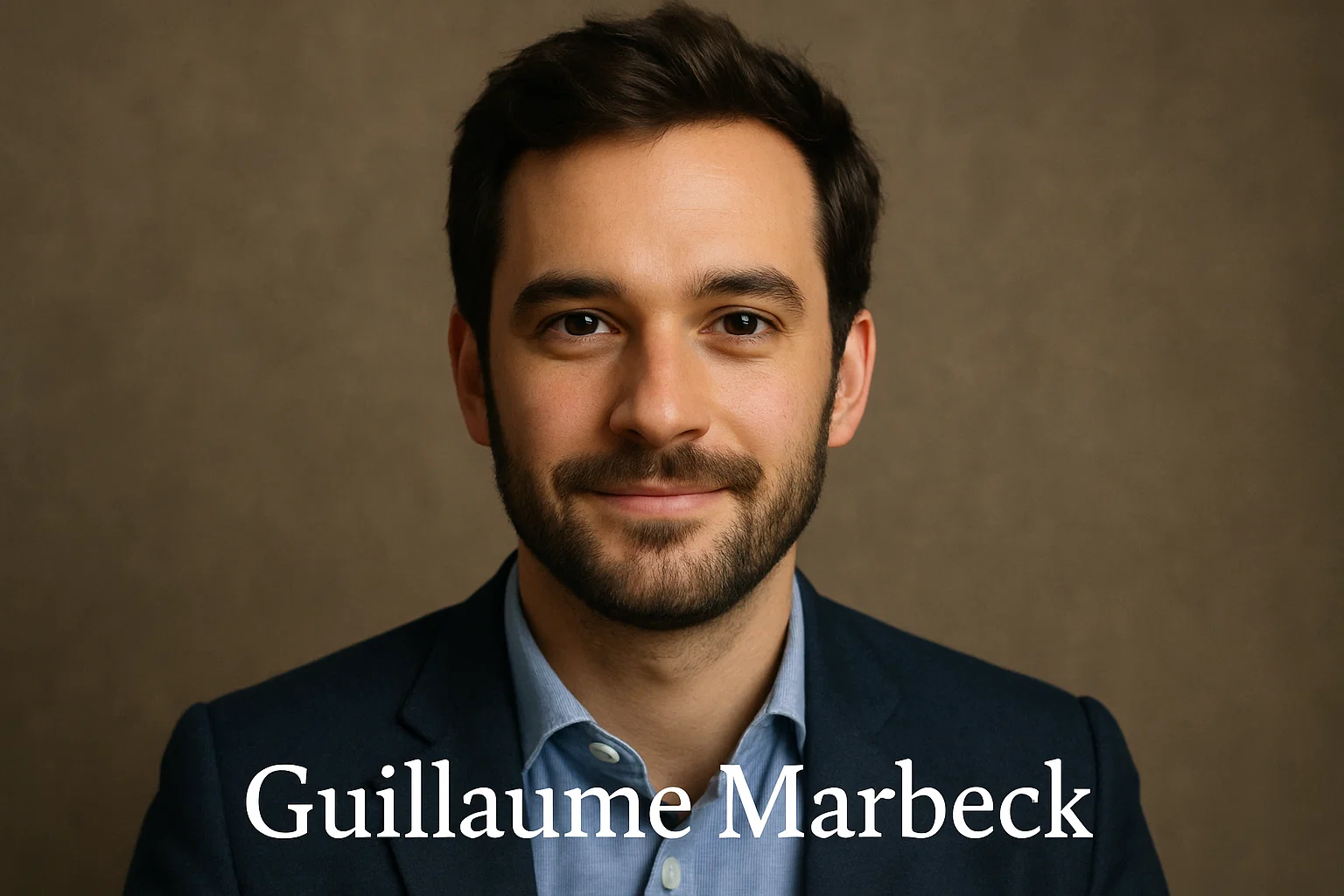
I’ve been covering this industry long enough to know a “moment” when I see one. And folks, Guillaume Marbeck isn’t just having a moment. He’s crashing the party. This isn’t just another actor bio; this is a look at a guy who hacked the system, shaved his head, and stole the show from under the nose of cinematic history.
Key Takeaways
- The Anti-Actor: Marbeck entered the game to learn directing, not to chase fame.
- The Transformation: He voluntarily went bald for a month just to nail Godard’s hairline.
- The Hustle: From buying films at the American Film Market (AFM) to running a photo studio, he paid his dues in the trenches.
- The Breakout: His role in Nouvelle Vague (2025) has cemented him as a major new force.
- The Philosophy: He treats acting like a “Rubik’s Cube,” looking for the puzzle in the personality.
Wait, Where Did This Guy Come From?
If you check the typical French actor’s resume, you usually see the same bullet points: prestigious drama school, a few years in theatre, a small role in a TV crime drama, and then the big screen. It’s a conveyor belt.
Marbeck didn’t ride the belt. He built the machine.
Before he was the face of the French New Wave revival, Marbeck was grinding in the gears of the industry. He wasn’t waiting for the phone to ring; he was the guy making the calls. He worked in distribution, which, if you’ve ever done it, you know is unglamorous, high-stress work. He was out there at the American Film Market (AFM), haggling over rights, figuring out what makes a movie sellable.
I found out he even did a stint in Los Angeles back in 2016, interning at a projection company for kids’ entertainment. Imagine that. The guy now playing the intellectual giant Jean-Luc Godard once spent his days likely troubleshooting projectors and dealing with the gritty, unsexy side of Hollywood infrastructure.
Why does this matter? Because when you watch him act, you aren’t watching a theater kid who has never had a real job. You’re watching a guy who knows the cost of a film reel. He told The Playlist recently that he wanted to “talk to every person that I would have to work with to make the best movie.” He approached the industry like a spy gathering intel. Acting was just the final frontier he hadn’t conquered yet.
How Does a Photographer Land a Lead Role with Richard Linklater?
This is my favorite part of the Marbeck lore because it’s so audacious.
Picture this: It’s post-COVID. Marbeck is running a photography studio in Paris. He’s paying the bills by taking headshots for other actors. He’s literally standing behind the camera, telling other people how to look good, how to tilt their chin, how to sell the emotion. He’s watching them stress about auditions, sensing their desperation.
And he decides, “I need to understand what they are going through if I ever want to direct them.”
He didn’t go the traditional route. He didn’t grovel to agents. He made a video presentation. But not a monologue from Hamlet. No, he made a video pitching himself as a character, effectively saying, “If you were making a biopic about me, you’d have to hire me.”
It’s the kind of meta-confidence that borders on arrogance, but in this business, that’s often the currency that buys you a meeting. Casting director Stéphane Batut saw it. He didn’t just see a face; he saw a “logic.” That’s the word Marbeck uses. He approaches characters not through emotion, but through logic. He views the world as a “Rubik’s Cube with seven million yards of faces.”
Three months later, the email landed. They weren’t looking for an extra. They were looking for Jean-Luc Godard. And they wanted the photographer to play him.
Is It True He Went Bald on Purpose?
We need to talk about the hair.
Method acting gets a bad rap these days. We hear horror stories of actors sending dead rats to co-stars or refusing to break character for six months. It’s exhausting. But Marbeck’s commitment was different. It was physical, visible, and humiliating.
Godard, the icon, was known for his intellect, his sunglasses, and yes, his receding hairline. Marbeck had a full head of hair.
He was working as an extra on a project called Couture (ironic, right?) when he met the head hairdresser. He knew he needed to look the part for Nouvelle Vague. A bald cap is the easy way out. It’s safe. You take it off at the end of the day and go back to being the handsome lead.
Marbeck didn’t want safe.
He let the hairdresser shave his hairline back. Way back. For an entire month, he walked around the streets of Paris looking like he was aging at hyper-speed. He called it “the meanest thing that you can do to a man.”
But think about the psychology of that. When you catch your reflection in a shop window and you don’t recognize yourself—when you see a frantic, balding intellectual staring back—it changes how you walk. It changes how you hold your head. You stop trying to be “pretty” for the camera because the vanity has already been stripped away by the razor. That’s not just method; that’s submission to the role.
Why Did Linklater Pick Him Over a Star?
Richard Linklater is a Texas legend. He made Dazed and Confused, Before Sunrise, Boyhood. He could have snapped his fingers and gotten any A-list French actor to clear their schedule.
But here’s the thing about biopics: Fame is a distraction.
If you cast a massive star to play Godard, the audience spends the first twenty minutes thinking, “Oh, look, it’s [Famous Actor] doing a Godard impression.” You’re watching the actor, not the character.
Linklater needed a blank slate. He needed someone who didn’t bring twenty years of tabloid baggage to the screen. Marbeck was perfect because he was a ghost. He had the industry knowledge to understand the meta-narrative of a movie about making a movie, but he had zero public persona.
Plus, the chemistry was undeniable. Nouvelle Vague is a film about the chaos of creation. It’s about shooting without permits, stealing shots, writing dialogue on the morning of the shoot. Marbeck, with his background in indie hustling and his desire to direct, understood that chaotic energy in his bones. He wasn’t just an actor waiting for his mark; he was a collaborator.
What’s It Like Watching Him on Screen?
I’ll be honest: I was worried.
Godard is a trap. He’s too cool. It’s easy to play him as a caricature—just a cloud of cigarette smoke and pretentious quotes about truth and cinema.
Marbeck dodges the trap. He plays Godard as a man who is terrified.
There’s a scene where he’s arguing about the production, and you can see the cracks in the armor. He captures that specific insecurity of the young artist who is convincing everyone he’s a genius while secretly wondering if he’s a fraud. It’s magnetic.
He uses his body like a prop. The way he handles the cigarette isn’t just a habit; it’s a shield. The sunglasses aren’t an accessory; they are a wall he puts up between himself and the world he’s trying to deconstruct.
The critics at Cannes went nuts for a reason. The Northern Express noted how he portrays Godard as “both brilliant and vulnerable at the same time.” That’s the sweet spot. He isn’t playing the legend; he’s playing the guy before he became the legend.
The “Nepo Baby” Debate: Is Marbeck the Antidote?
We can’t talk about French cinema without addressing the elephant in the room: Nepotism.
France loves its dynasties. If your last name isn’t recognized, breaking in can feel like trying to storm the Bastille with a toothpick. The industry is insular. It protects its own.
Marbeck represents the disruption of that system. He didn’t get here because his dad produced a hit in the 80s. He got here because he worked in distribution, he took headshots, he interned in LA, and he made a weird video pitch.
He’s the antidote to the polished, safe, predictable casting we’ve grown accustomed to. He brings a grit that feels earned. When he talks about “losing a lot of money” by canceling photo shoots to take the role, I believe him. That financial anxiety? That’s real. You can’t teach that in drama school. That’s the hunger of a guy who has bills to pay.
Is He Just a One-Hit Wonder?
It’s the question on everyone’s lips. “Can he do it again?”
We’ve seen it a million times. An actor explodes onto the scene in a perfect role, gets typed-cast, and then fades into the background of mediocre rom-coms.
I don’t think that’s happening here.
Why? Because Marbeck doesn’t want to be a movie star. He wants to be a filmmaker.
This acting gig? To him, it’s a masterclass. He’s spying. He’s watching how Linklater blocks a scene. He’s learning how the lighting crew sets up the shot. He’s absorbing the rhythm of the set.
He’s already produced films like Voluntary Infection and The Life Before. He knows the business side. He’s not going to sign a bad contract just to stay famous. He has the leverage now to make what he wants.
I predict that in five years, we won’t be talking about Guillaume Marbeck the actor. We’ll be talking about Guillaume Marbeck the director. And if his acting is any indication of his directorial eye, we are in for a treat.
What’s Next for Him?
Right now, he’s riding the wave. The Cannes ovation, the Netflix release, the interviews. It’s the victory lap.
But listen to him in interviews. He’s already restless. He talks about challenging reality. He’s not talking about buying a yacht; he’s talking about art.
I’d love to see him do something completely contemporary next. Strip away the period costumes. No black and white. Put him in a gritty, modern drama set in the suburbs of Paris. Let’s see if that intensity translates without the sunglasses.
Or better yet, let’s see the script he’s writing. Because you know he’s writing one. You don’t play Godard and walk away without the itch to pick up a camera yourself.
Conclusion
Guillaume Marbeck is the best kind of surprise. He’s a reminder that the film industry, for all its flaws and gatekeeping, can still be hacked. You can still sneak in the back door if you’re smart enough, hungry enough, and willing to let a hairdresser ruin your hairline for art.
He isn’t just “rising talent.” He’s a fully formed artist who just happened to step into the spotlight. Whether he stays in front of the camera or moves behind it, he’s changed the energy of the room. And frankly, it’s about time.
If you haven’t seen Nouvelle Vague yet, do it. Not just for the history, but to watch a guy who knows he’s getting away with the heist of a lifetime, and loving every second of it.
FAQs – Guillaume Marbeck
Who is Guillaume Marbeck and why is he considered a rising star in French cinema?
Guillaume Marbeck is an emerging French actor and filmmaker known for his unconventional approach, industry background, and breakout role in Richard Linklater’s ‘Nouvelle Vague,’ which has cemented his reputation as a major new force in cinema.
What unique background does Guillaume Marbeck have that sets him apart from other actors?
Marbeck’s background includes working in film distribution, interning in Hollywood, and running a photography studio, giving him an industry-savvy perspective and practical experience beyond traditional acting training.
Why did Guillaume Marbeck decide to shave his head for his role, and how does this reflect his approach to acting?
Marbeck voluntarily shaved his head to accurately resemble Jean-Luc Godard, demonstrating his commitment to method acting and his willingness to physically transform himself to authentically portray his characters.
How did Richard Linklater choose Guillaume Marbeck over more famous actors for the role of Godard?
Linklater selected Marbeck because he wanted a blank slate without tabloid baggage, and he believed Marbeck’s industry knowledge, unconventional background, and the chemistry between them made him the ideal choice for the role.
What should audiences look for when watching Guillaume Marbeck on screen?
Audiences should notice how Marbeck captures the vulnerability beneath the legend of Godard, portraying him as a man terrified and insecure, using subtle physical expressions and body language to reveal unseen depths.