

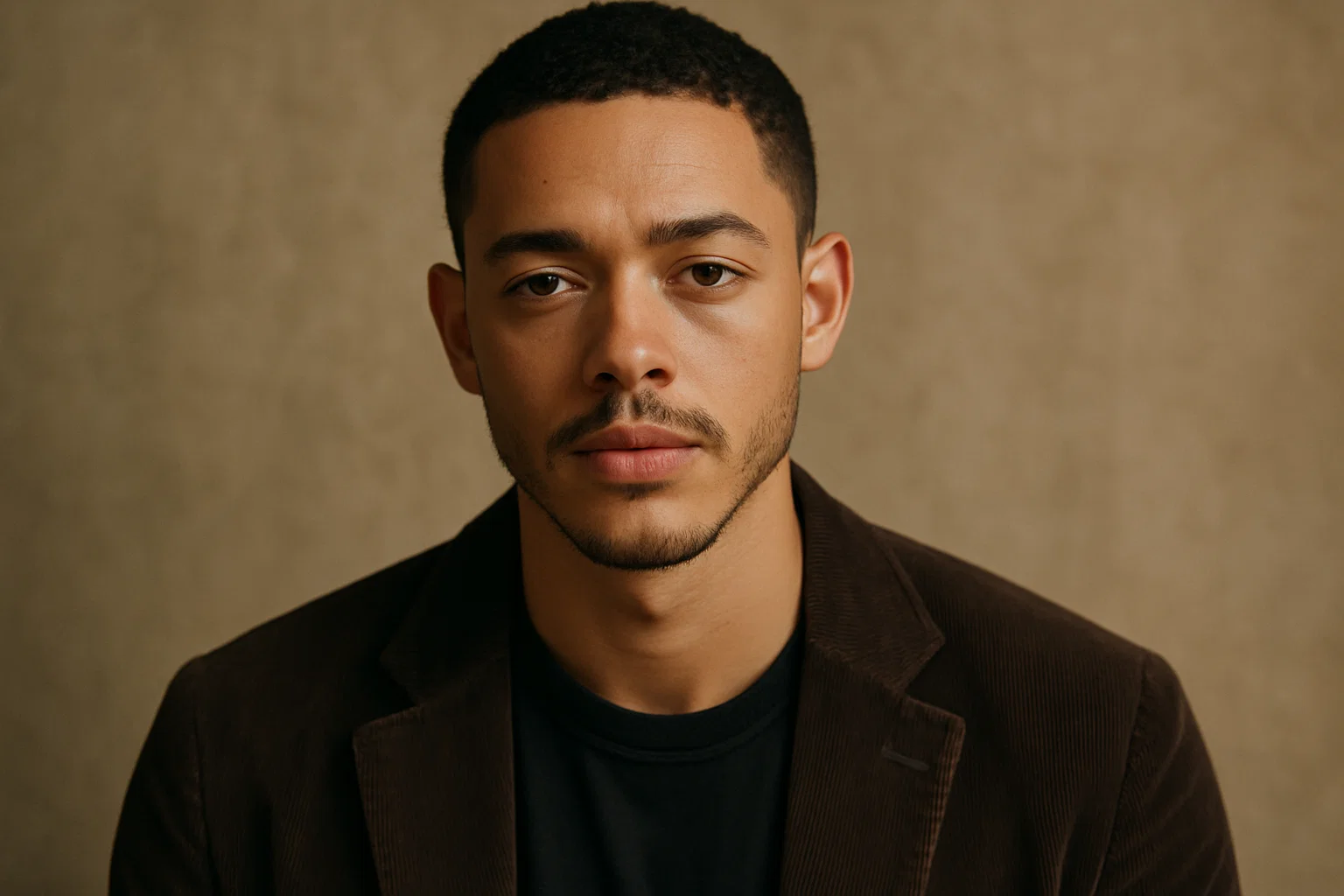
You know that specific feeling when you’re watching a show, maybe half-paying attention, and suddenly someone walks on screen who forces you to put your phone down? That was my exact introduction to Daryl McCormack. I was sitting on my couch with a cold beer, binging the later seasons of Peaky Blinders with my brother. We were deep in the Shelby family drama when this new Isaiah Jesus stepped into the frame.
He wasn’t the Isaiah we remembered from the earlier seasons. He was sharper, smoother, and held a quiet, lethal confidence that immediately caught our attention. It’s no small feat to stand next to Cillian Murphy—who practically swallows the scenery with just his eyes—and not disappear into the wallpaper. But Daryl McCormack didn’t just survive that scene; he owned his corner of it.
Since that moment, the Irish actor has gone from a “hey, I know that guy” face on Irish television to a legitimate international heavyweight. Most people now recognize him as the charming, incredibly empathetic sex worker in Good Luck to You, Leo Grande. That role didn’t just earn him BAFTA nominations; it solidified him as a leading man who isn’t afraid of risky material. But the man behind these characters is just as interesting as the roles he picks. From the hurling pitches of County Tipperary to the massive sets of Hollywood blockbusters like Twisters and the upcoming Knives Out mystery, McCormack is carving out a career that feels earned, not given.
Also Read: Tonatiuh Elizarraraz – Tonatiuh and Leo Woodall
Key Takeaways
- Roots: Born in Nenagh, Co. Tipperary, raised by an Irish mother with a close connection to his African-American father in Baltimore.
- The Big Break: Shot to global fame as the titular character in Good Luck to You, Leo Grande alongside Emma Thompson.
- TV Heavyweight: Made his mark in Peaky Blinders (Isaiah Jesus), Bad Sisters (Matthew Claffin), and The Woman in the Wall.
- Next Up: Starring in major 2024/2025 blockbusters Twisters and Wake Up Dead Man: A Knives Out Mystery.
- Recognition: Two-time BAFTA nominee and winner of the prestigious Trophée Chopard at Cannes.
Where Did Daryl McCormack Start and How Did Tipperary Shape Him?
To really get who this guy is, you have to look at where he came from. Daryl McCormack was born on January 22, 1993, in Nenagh, County Tipperary. If you’ve never been to Nenagh, picture a classic, tight-knit Irish town where everyone knows everyone’s business. His background isn’t your typical Hollywood origin story. He is the son of an Irish mother, Theresa McCormack, and an African-American father, Alfred Thomas, from Baltimore.
His parents met during a summer in California—a classic whirlwind romance. When Theresa got pregnant, she moved back to Ireland to raise Daryl at home. Growing up mixed-race in rural Ireland in the 90s could have easily been an isolating experience. You stick out. But McCormack always talks about his upbringing with a genuine warmth. He holds dual citizenship and stays tight with his dad’s side of the family in the States.
I read an interview once where he credited his mother’s resilience as a single parent for his own work ethic. That hit home for me. There’s a specific kind of drive you see in guys who watched their moms pull double duty to make ends meet. It grounds you. It stops you from getting a big head. McCormack didn’t stumble into acting by accident; he attacked it with the discipline of an athlete. In fact, he was a serious hurler before he ever stepped on a stage. He eventually traded the sliotar for scripts, training at the Dublin Institute of Technology and the Gaiety School of Acting.
From Fair City to the West End: Was It an Easy Road?
Don’t let the magazines fool you; there’s no such thing as an overnight success. Before the red carpets and the fancy awards dinners, McCormack was in the trenches. His first real screen credit was in the Irish soap opera Fair City.
If you know anything about acting, you know soap operas are a boot camp. It’s a grinder. You have to memorize pages of dialogue in minutes, hit your marks on the first take, and make melodramatic storylines feel real. Playing Pierce Devlin gave him the kind of technical discipline that you can’t learn in a classroom.
But the stage is where he really cut his teeth. In 2018, he made his West End debut in The Lieutenant of Inishmore. He wasn’t doing community theater; he was in London, going toe-to-toe with Aidan Turner. I managed to dig up some clips of his stage work from back then. The physical presence he had was undeniable. He brought this raw, kinetic energy to the character of Brendan that just screamed potential. Transitioning from stage to screen trips up a lot of actors—they project too much, they act “too big.” McCormack figured out the art of stillness early. He learned that on camera, a look often screams louder than a shout.
What Did Taking Over a Role in Peaky Blinders Actually Mean?
Joining a show that’s already a massive hit is terrifying. Joining Peaky Blinders in its fifth season, and replacing an actor (Jordan Bolger) who fans already liked? That’s walking into the lion’s den. Fanbases are protective. They hate change. They notice if a haircut is wrong, let alone a whole new face.
McCormack slid into that flat cap and three-piece suit like he’d been wearing them his whole life. Why did this role matter so much? Because it proved he could hang with the big dogs. Peaky Blinders is stylized, intense, and dripping with testosterone. You have Cillian Murphy, Tom Hardy, Helen McCrory—titans of the industry.
When I watched him in the Garrison pub scenes, I didn’t see a rookie trying to keep up. I saw a peer. He brought a fresh swagger to Isaiah Jesus. He gave the character a harder edge, a sense of dangerous ambition that fit perfectly with the darker, more psychological tone of the later seasons. It introduced him to a global audience. Suddenly, he wasn’t just an Irish actor; he was a recognizable face on Netflix screens from New York to Tokyo. It was the launchpad he needed.
Why Was Good Luck to You, Leo Grande Such a Massive Gamble?
If Peaky Blinders got his foot in the door, Good Luck to You, Leo Grande kicked it wide open. But let’s be real: this movie was a huge risk. A film set almost entirely in one hotel room, featuring a retired widow hiring a sex worker? That sounds like a recipe for a boring stage play or an awkward disaster. It relies 100% on the chemistry between two people.
He was cast opposite Emma Thompson. That’s daunting enough. But the dynamic they built was electric. McCormack played Leo Grande not as a stereotype or a caricature, but as a professional—articulate, empathetic, and incredibly charming.
I remember talking about this movie with a few of my buddies after it came out. We were surprised by how rare it is to see a male character show that kind of emotional intelligence on screen. Usually, guys in movies are solving problems with fists, guns, or fast cars. Leo solved them by listening. He was patient.
The film stripped away all the Hollywood magic tricks. No CGI, no explosions to hide behind. Just acting. McCormack matched Thompson beat for beat. He earned a BAFTA nomination for Best Actor, a nod that usually goes to veterans with decades of experience. He allowed himself to be the object of desire—the “female gaze”—without losing his agency or masculinity. It was a brave performance that redefined what a leading man could look like.
Is Matthew Claffin in Bad Sisters His Best Performance Yet?
Just as the world was falling in love with the sensitive, perfect Leo Grande, McCormack took a sharp left turn. In Sharon Horgan’s dark comedy Bad Sisters, he played Matthew Claffin. And man, this character was a mess—in the best possible way.
Matthew is a regular guy caught in a web of lies, insurance fraud, and a forbidden romance with one of the sisters he is supposed to be investigating. The brilliance here was the moral ambiguity. You wanted to root for him, but he was technically working for the “bad guys” (or at least, against our anti-heroines).
I found myself shouting at the TV during his scenes. You’re torn between wanting him to figure it out and wanting him to fail so the sisters get away with it. That’s the mark of a great actor. He made a character that could have been a boring “insurance agent” archetype feel deeply human, conflicted, and stressed out. His chemistry with Eve Hewson (Becka) was palpable. It added a layer of tragedy to the show because you knew, deep down, this relationship was doomed. Bad Sisters proved McCormack wasn’t a one-trick pony. He could handle dark comedy, ensemble casts, and long-form storytelling.
- Versatility Check:
- The Lover: Leo Grande (Sensitive, confident).
- The Gangster: Isaiah Jesus (Dangerous, loyal).
- The Everyman: Matthew Claffin (Conflicted, anxious).
How Does He Actually Approach the Work?
McCormack isn’t one of those method actors who disappears into the woods for six months and refuses to shower. He approaches the work with a thoughtful, almost academic precision. He talks often about finding the “truth” of a scene, which sounds cliché until you see him do it.
One thing you’ll notice is his physicality. Whether it’s the confident, prowling stride of Leo Grande or the hunched, anxious posture of Matthew Claffin, he uses his body to tell the story. That’s the theatre training coming out. He understands that acting isn’t just about the face; it’s about how you hold yourself in a space.
He’s also incredibly picky. He hasn’t just said “yes” to every script thrown his way since his breakout. He chooses roles that challenge him. From the gothic thriller The Woman in the Wall to the massive disaster epic Twisters, he is building a diverse portfolio. He refuses to be pigeonholed. He isn’t just “the romance guy” or “the Irish guy.” He’s an actor’s actor.
What Can We Expect From Him in Twisters and Knives Out 3?
The future looks loud. Daryl McCormack has officially entered his blockbuster era. He landed a role in Twisters, the standalone sequel to the 90s classic. While his character, Jeb, was part of the storm-chasing crew, just being in a summer tentpole movie signals that Hollywood studios see him as a bankable star. It’s a long way from the intimate, quiet set of Leo Grande.
But the real excitement is his casting in Rian Johnson’s Wake Up Dead Man: A Knives Out Mystery. This is the gold standard for modern ensembles. Getting an invite to Benoit Blanc’s world is a badge of honor. He’s joining a cast that includes Josh O’Connor, Cailee Spaeny, and Andrew Scott.
I can already picture him in that universe. The Knives Out films thrive on actors who can play duplicitous, charming, and intelligent characters. That is Daryl McCormack’s bread and butter. We can expect him to bring his signature subtle intensity to these larger-than-life worlds. He has the charisma to hold the center of the frame, even when surrounded by A-list stars and massive set pieces.
Who Is the Guy Behind the Roles?
So, who is Daryl McCormack when the cameras stop rolling? By all accounts, he’s a guy who values his privacy. He lives in London and keeps a relatively low profile compared to some of his peers who are falling out of nightclubs every weekend. He calls himself an “oversharer” in conversation, which I think makes him a better actor. He craves connection.
He remains incredibly close to his mother. He cites her constantly as his inspiration. This respect for women bleeds into his work. His reverence for Emma Thompson and Sharon Horgan goes beyond professional courtesy; he seems to genuinely thrive in collaborative environments led by strong women.
He’s also got style. If you look at his red carpet appearances, he takes risks. He wears color, texture, and interesting cuts. He isn’t afraid to stand out. It reflects a confidence in his own skin that is refreshing to see in an industry full of cookie-cutter suits.
Why Does His Success Matter for Representation?
We can’t talk about Daryl McCormack without talking about what he represents. As a mixed-race Irish man, he is changing the face of what it means to be “Irish” to the rest of the world. For decades, the international perception of an Irish actor was a very specific, usually white, archetype. McCormack shatters that.
He proves you can be from Tipperary, have the accent, have the heritage, and still look like him. He isn’t limited by his background; he fuels his work with it. He has spoken about the importance of seeing people who look like him on screen. Now, he is that person for the next generation of kids in Ireland.
I think back to that first time I saw him in Peaky Blinders. I didn’t think about representation then; I just thought, “That guy is cool.” And maybe that’s the most powerful form of representation—when the talent is so undeniable that it transcends the labels, but the visibility makes a difference anyway.
Conclusion
Daryl McCormack isn’t just “rising” anymore; he has risen. From the cobblestones of Fair City to the high-stakes mystery of Knives Out, his journey is a masterclass in talent, smart choices, and hard work. He brings a unique blend of vulnerability and strength to every role he touches.
He captivated us as Leo, intrigued us as Isaiah, and frustrated the hell out of us as Matthew. As he steps into the world of massive Hollywood blockbusters, one thing feels certain: he won’t lose the authenticity that got him there. For movie lovers like me, seeing his name on a cast list is now a guarantee that the acting will be top-tier. He is a screen star for the modern age, and honestly, we’re lucky to watch him work.
For more information on his acclaimed work and upcoming accolades, you can check the BAFTA Awards official site.
FAQs – Daryl McCormack
Where is Daryl McCormack from, and how has his background influenced his career?
Born in Nenagh, County Tipperary, Ireland, Daryl McCormack has a mixed heritage with an Irish mother and an African-American father. Growing up in rural Ireland in a mixed-race family provided him with a unique perspective that he channels into his work, and he is recognized as a figure who challenges traditional Irish actor archetypes, representing diversity on screen.
How did Daryl McCormack start his acting journey?
Daryl McCormack began his acting career on Irish television with a role in ‘Fair City,’ gaining technical discipline through the demanding environment of soap operas. He also trained at the Dublin Institute of Technology and the Gaiety School of Acting, and made his stage debut in London’s West End in ‘The Lieutenant of Inishmore,’ which helped hone his physical presence and acting skills.
What role did Daryl McCormack play in ‘Peaky Blinders,’ and why was it significant?
Daryl McCormack joined ‘Peaky Blinders’ in its fifth season as Isaiah Jesus, replacing Jordan Bolger. His portrayal introduced a fresh swagger and added depth to the character, demonstrating that he could perform alongside industry legends like Cillian Murphy. This role significantly increased his international visibility and proved his capability to handle high-profile, stylized series.
What upcoming projects demonstrate Daryl McCormack’s rising star power?
Daryl McCormack is set to star in the blockbuster film ‘Twisters,’ the sequel to the 90s hit, and has been cast in Rian Johnson’s ‘Wake Up Dead Man: A Knives Out Mystery.’ These projects place him in major Hollywood productions, showcasing his transition into the blockbuster era and his status as a rising star in the industry.