

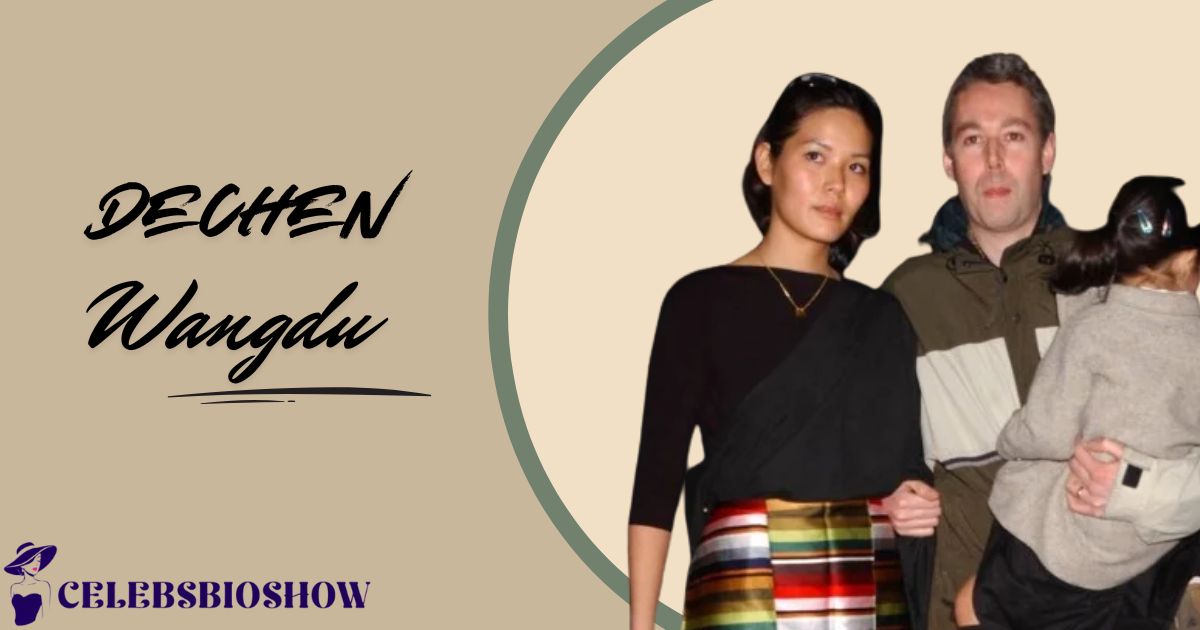
If you were a teenager in the 90s like I was, the Beastie Boys weren’t just a band; they were a lifestyle. We watched them grow from the bratty, beer-spilling kids of Licensed to Ill into the thoughtful, suit-wearing statesmen of hip-hop who dropped Ill Communication. For the longest time, I wondered what caused that shift. What made three Jewish kids from New York trade in the hydraulic cars for Tibetan prayer flags?
The answer, as it often turns out, wasn’t just a spiritual awakening in a vacuum. It was a person. It was Dechen Wangdu.
To the casual observer, Dechen Wangdu might just be “MCA’s widow.” But that label is lazy, and frankly, it’s insulting. Dechen is a powerhouse. She is the American-born daughter of Tibetan exiles who didn’t just marry a rock star—she radicalized him. She took the raw energy of one of the world’s biggest hip-hop groups and channeled it into a geopolitical movement that actually made a dent in the universe.
This isn’t just a profile about a celebrity spouse. This is a deep dive into the life of a woman who lived at the intersection of punk rock and political revolution. We are going to look at her early life, her career, and the incredible, quiet legacy she has built.
Also Read: Christina Mangosing and Diane Rogers
Key Takeaways
- Born Into Resistance: Dechen Wangdu isn’t a convert; she is the daughter of prominent activists and has been fighting for Tibet since she could walk.
- The Catalyst: She is widely credited as the grounding force that solidified Adam Yauch’s (MCA) commitment to Buddhism and the Free Tibet movement.
- Creative Chops: She isn’t just an activist; she is an art director and filmmaker, notably shaping the aesthetic of the To the 5 Boroughs album.
- The “Rancid” Wedding: Her wedding to Yauch perfectly encapsulated their vibe—a traditional Tibetan ceremony followed by a reception headlined by the punk band Rancid.
- The Silent Guardian: Since Yauch’s tragic death in 2012, she has protected their daughter, Tenzin Losel, and managed his estate with fierce privacy.
Who Is the Real Dechen Wangdu?
It is easy to get lost in the shadow of a giant. When your husband is one-third of the Beastie Boys, the spotlight naturally drifts his way. But Dechen Wangdu has always stood firmly in her own light. Born in the United States, she is part of a unique generation of Tibetans—those born in the West, physically removed from their homeland but spiritually tethered to it by the trauma of exile.
I’ve always been fascinated by people who inherit a cause. For most of us, politics is something we learn about in college. For Dechen, it was breakfast conversation. Her parents were deeply involved in the Tibetan independence movement. She didn’t have the luxury of being indifferent.
She grew up navigating two very different worlds. On one hand, she was an American kid, likely dealing with the same pop culture and school drama as the rest of us. On the other, she was carrying the weight of a displaced nation on her shoulders. That duality creates a very specific kind of strength. It makes you serious. It makes you purposeful. And as we would later see, it makes you the perfect partner for a restless artist looking for meaning.
How Did Her Activist Roots Define Her Early Years?
You have to ask yourself: what shapes a worldview? Is it what you read, or is it what you live? For Dechen, it was undoubtedly the latter. Being the daughter of activists means you learn early on that the world isn’t fair, and that silence is complicity.
She didn’t just sit on the sidelines. By the time she was a young adult, she was in the trenches. She attended Harvard University—not just to get a shiny degree to hang on the wall, but to organize. She was a key player in the “Students for a Free Tibet” chapter there.
Imagine the energy of the mid-90s. The internet was barely a thing. Activism meant boots on the ground, flyers, organizing teach-ins, and shouting until someone listened. Dechen was right there in the mix. She wasn’t doing it for clout; there was no Instagram to post her protests on. She was doing it because her heritage demanded it. This relentless drive is what set the stage for a chance encounter that would eventually ripple through the entire music industry.
What Really Happened at That Harvard Speech?
The story of how Dechen Wangdu met Adam Yauch is one of those “truth is stranger than fiction” moments. It was 1995. The Dalai Lama was speaking at Harvard.
Now, picture the scene. You have Adam Yauch, the gravelly-voiced rapper who gave us “No Sleep Till Brooklyn,” sitting in the audience. He had already started his drift toward Buddhism, having visited Nepal and Tibet, but he was still searching. He was reportedly at a crossroads, wrestling with the idea of becoming a celibate monk. He was looking for a sign.
And there was Dechen.
She wasn’t there to fan-girl over a Beastie Boy. She was there working. She was representing the cause. They met, and by all accounts, the connection was electric. It wasn’t just physical attraction; it was a meeting of minds. Yauch told Rolling Stone years later that he was debating between monkhood and family life. Meeting Dechen made the choice obvious. She offered a path that combined spiritual devotion with human connection.
For guys like me, this was a pivotal moment to watch. It showed us that you didn’t have to choose between being “cool” and being “good.” You could be a rock star and still care about something real. Dechen was the living proof of that.
How Did She Revolutionize the “Free Tibet” Movement?
Let’s be real for a second. Celebrity activism can be cringe-worthy. We have all seen stars attach their names to causes they know nothing about just for the photo op. But the Free Tibet movement in the late 90s was different. It had teeth. And that was largely because of Dechen Wangdu.
She didn’t let Adam just be a figurehead. She educated him. She helped structure the Milarepa Fund, the non-profit organization they used to funnel money to the Tibetan people. But her biggest impact—the thing that I still have vivid memories of—was the Tibetan Freedom Concerts.
These weren’t just gigs. These were massive cultural events. We are talking hundreds of thousands of people in stadiums, listening to Rage Against the Machine, U2, and Bjork, but also listening to Tibetan monks and exiled activists. Dechen was the bridge. She ensured the message didn’t get drowned out by the feedback loops. She made sure the politics remained front and center.
Because of her, a kid in suburban Ohio who couldn’t point to Tibet on a map suddenly knew about the Dalai Lama. She leveraged her husband’s fame to amplify her people’s suffering, and she did it with a grace that was unmatched.
What Was the “Punk Rock meets Dharma” Wedding Like?
If I could have been a fly on the wall at one event in the 90s, it would have been the Yauch-Wangdu wedding in May 1998.
The duality of their life together was perfectly captured that day. They had a traditional Tibetan ceremony. We are talking robes, incense, prayers—a deeply solemn and spiritual union honoring her ancestors and their shared faith. It was a declaration of their commitment not just to each other, but to the culture they fought for.
But then? They threw a reception and hired Rancid.
Yes, that Rancid. The mohawked, ska-punk legends. Adam Yauch called up Tim Armstrong and asked them to play. The image of Tibetan monks mingling while Rancid tore through “Time Bomb” is just… it’s perfect. It sums up Dechen and Adam completely. They respected tradition, but they never lost their edge. They didn’t become boring, holy-roller types. They kept one foot in the mosh pit and one foot in the monastery. That balance is something Dechen seems to have mastered effortlessly.
Is She Just an Activist, or an Artist Too?
It is a mistake to pigeonhole Dechen Wangdu as strictly a political figure. She is an artist with a sharp visual eye. When you look at the later era of the Beastie Boys, the aesthetic became cleaner, more focused, and distinctly New York.
Dechen is credited as an art director on the 2004 album To the 5 Boroughs. I remember when that record dropped. It was a love letter to NYC after 9/11. The cover art—a detailed, almost architectural drawing of the skyline—was striking. It felt serious and respectful. Dechen’s involvement in that visual direction speaks volumes.
She also produced and featured in the documentary Free Tibet (1998). If you haven’t seen it, go find it. It chronicles the San Francisco concert and does a brilliant job of weaving the music with the message. It’s not just a concert film; it’s a historical document. Her touch is all over it, ensuring that the film didn’t just glorify the bands but actually educated the audience.
She has also written for Glamour and other publications, usually shedding light on the human rights abuses in her homeland. She uses every tool in her box—film, design, writing—to keep the story alive.
How Has She Maintained Privacy in a Clickbait World?
In an era where everyone is chasing 15 minutes of fame, Dechen Wangdu’s silence is deafening. Since Adam Yauch passed away in 2012, she has virtually vanished from the public eye, and I respect that immensely.
When Adam was diagnosed with cancer in 2009, the family closed ranks. They didn’t turn his illness into a reality show. They dealt with it with dignity. And when he died, the loss was felt globally by fans, but it was catastrophic for Dechen and their daughter, Tenzin Losel.
She could have written a memoir. She could have gone on the talk show circuit. She could have become a “professional widow” influencer. She did none of that. She chose to protect her daughter. She chose to grieve in private.
There is a profound strength in that. It reminds me that her connection to Adam wasn’t for public consumption. It was real. Her refusal to feed the tabloid machine has only made fans respect her more. She controls the narrative by saying nothing at all.
What Is Her Life Like Today?
So, where is Dechen Wangdu now? She is still in New York City, the city that adopted her and that her husband loved so fiercely. She is raising Tenzin, who is now a young woman herself.
While she stays out of the limelight, her influence is still felt. The Beastie Boys’ legacy is managed with incredibly high standards. You don’t hear “Sabotage” in car commercials, and you don’t see their image slapped on cheap merchandise. That level of integrity suggests that Dechen (along with Mike D and Ad-Rock) is very careful about how that history is preserved.
She is likely still deeply embedded in the activist community, doing the work that doesn’t make headlines. The fight for a free Tibet hasn’t ended, and I can’t imagine a woman like Dechen ever giving up on it. She’s just doing it her way—quietly, effectively, and without the need for applause.
Why Does Dechen Wangdu Matter to Us?
Why spend 2,500 words talking about someone who clearly wants to be left alone? Because stories like hers matter.
We live in a cynical time. We assume everyone has an angle. But Dechen Wangdu represents authenticity. She showed us that you can marry into fame and not lose your soul. She showed us that pop culture can actually stand for something.
She humanized a legend. Adam Yauch became a better man, a better artist, and a better human because of her influence. And through him, she influenced millions of us. I know I started reading about Buddhism because of the Beastie Boys. I know I learned about the occupation of Tibet because of the concerts she organized.
Her ripple effect is massive. She is a reminder that the most influential people in the room aren’t always the ones holding the microphone. Sometimes, they are the ones standing just off-stage, making sure the message is right.
Common Questions and Misconceptions
There is a lot of bad info out there, probably written by bots. Let’s set the record straight on a few things that always pop up in forums.
- Is she an actress? No. There are other people with similar names, and sometimes databases get confused. Dechen is a filmmaker and activist, not a Hollywood actress.
- Did she break up the band? Absolutely not. Unlike the “Yoko Ono” trope that lazy journalists love to use, Dechen didn’t pull Yauch away from the Beastie Boys. She gave him the spiritual grounding that allowed the band to mature and survive for another 15 years. The band was tighter and more creative after she arrived.
- Is she on social media? Not in a public capacity. If you find an account, it’s probably a fan page or a fake. She values her privacy above engagement metrics.
The Lasting Legacy
When I look back at the legacy of the Beastie Boys, I don’t just see three guys in jumpsuits. I see a movement. I see a progression from boys to men. And standing firmly at the center of that maturity is Dechen Wangdu.
She is a survivor. She survived the exile of her people. She survived the chaotic world of the music industry. She survived the heartbreaking loss of her husband. And she has come out the other side with her dignity and her principles intact.
Dechen Wangdu might not want the credit. She might shun the spotlight. But those of us who were paying attention know the truth: She was the heart of the operation. She was the quiet storm that changed everything. And for that, she deserves every bit of respect we can give her.
FAQs – Dechen Wangdu
Who is Dechen Wangdu and why is he significant in Tibetan Buddhism?
is a highly respected Tibetan Buddhist lama and Dzogchen master known for his expertise in the Nyingma lineage and his influential teachings on Longchen Rabjam’s writings.
What are Dechen Wangdu’s main contributions to the Nyingma tradition?
has helped preserve the Nyingma lineage by interpreting and teaching Longchen Rabjam’s key writings, thus making Dzogchen teachings more accessible and keeping the tradition alive.
How does Dechen Wangdu support women’s empowerment within Buddhism?
advocates for gender equality and feminine wisdom, emphasizing that women possess vital spiritual insights and actively works to uplift women’s roles in Buddhist practice and society.
What is Dechen Wangdu’s background and spiritual journey?
Born in Tibet amidst political upheaval, Dechen Wangdu dedicated his life to studying and practicing Dzogchen, overcoming cultural repression to become a revered master committed to the preservation of Tibetan Buddhism and his homeland’s culture.
What impact has Dechen Wangdu had through his philanthropic efforts?
has significantly aided the Tibetan community by supporting disaster relief, rebuilding homes and clinics, and providing education and training, demonstrating his dedication to humanitarian and spiritual principles.