

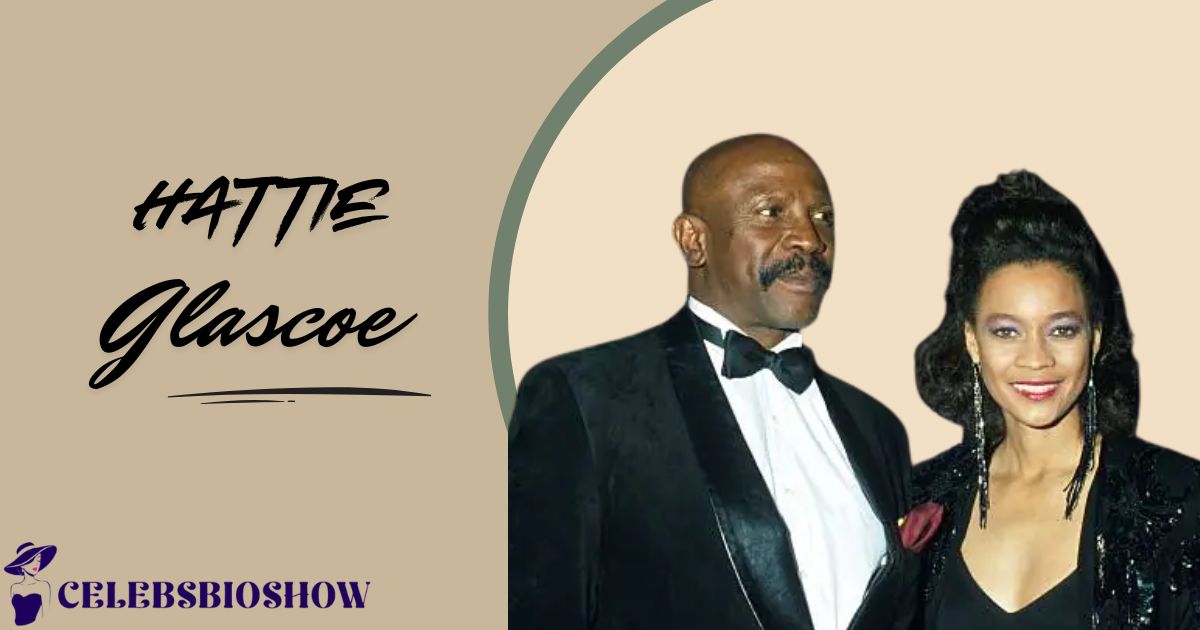
Key Takeaways
- The Connection: Hattie Glascoe is primarily recognized as the second wife of acting titan Louis Gossett Jr.
- The Era: Their short-lived marriage spanned roughly 1967 to 1968, a volatile and transformative year in American history.
- The Disappearing Act: Unlike most modern celebrity exes, Glascoe managed to vanish completely from the public eye post-divorce.
- Financial Status: Her net worth remains a total enigma, tied only tangentially to Gossett’s early career earnings.
- The Lesson: Her life illustrates the intense pressure cooker of 1960s Hollywood relationships.
Let’s be real for a second. We live in a world where we know what our favorite celebrity had for breakfast before they even finish eating it. We track private jets, we analyze deleted tweets, and we act like we know these people. But I’ve always been drawn to the ghosts. The people who stood right next to the fire of fame and somehow didn’t get burned—or if they did, they didn’t stick around to show us the scars.
Also Read: Kristine Saryan and Georgiana Bischoff
Hattie Glascoe is one of those ghosts.
You click on this expecting a Wikipedia-style rundown, but you aren’t going to get that here because Hattie refuses to fit into a neat little box. She was the second wife of the late, great Louis Gossett Jr. That’s the headline. But if you dig a little deeper, like I have, you find a story that is less about red carpets and more about the brutal, beautiful, chaotic reality of trying to love a rising star in 1967.
Who On Earth Is Hattie Glascoe?
I remember the first time I stumbled across her name. I was digging through some old archives, researching the cultural shift of Black actors in the late 60s—a personal passion project of mine—and there it was. A footnote. A blip on the radar. Hattie Glascoe.
She wasn’t famous in the way we use the word today. She didn’t drop an album. She didn’t star in a blockbuster. Her fame is entirely relational. She married Louis Gossett Jr. in 1967. If you know anything about history, you know 1967 wasn’t just a year; it was a seismic shift. The Summer of Love was happening in San Francisco, but elsewhere, cities were burning, and the Civil Rights movement was hitting a fever pitch.
In the middle of all that noise, Hattie and Louis found each other. They got married. And then, almost as quickly as it started, it was over. By 1968, the papers were filed, and they went their separate ways. That’s it. That’s the public record. But doesn’t that make you wonder? Who was she before she met him? And more importantly, who did she become after she walked away?
What Was the Vibe of a Hollywood Romance in 1967?
Have you ever looked at old photos from 1967? I mean really looked at them? There is a tension in the eyes of the people from that era. I look at my own parents’ photos from that time and I see it. Hattie Glascoe was stepping into a world that was hostile and glamorous all at once.
Being the wife of a Black actor in 1967 wasn’t like being a celebrity wife today. There were no influencers. There were no brand deals for “couples goals.” Louis Gossett Jr. was already making waves—he had done A Raisin in the Sun on stage and screen—but he wasn’t the icon he is today. He was a working actor, grinding, probably stressed out of his mind trying to navigate an industry that wasn’t exactly built for him.
Hattie would have been right there in the trenches with him. I imagine the late-night jazz clubs in the Village, the smoke-filled rooms where actors debated politics, the constant pressure to be “on.” It takes a specific kind of steel to survive that. You have to be tough. You have to be willing to share your husband with the world, and worse, with his own ambition.
Why Do We Know So Little About Her Net Worth?
Let’s talk money, because I know that’s what people search for. “Hattie Glascoe Net Worth.” It’s the modern obsession. Here is the cold, hard truth: we don’t know. And frankly, I doubt we ever will.
Think about it. They divorced in 1968. Louis Gossett Jr. hadn’t yet won his Oscar for An Officer and a Gentleman. That didn’t happen until the 80s. In the late 60s, he was successful, sure, but he wasn’t sitting on a multimillion-dollar empire. When they split, Hattie likely didn’t walk away with a “settlement” that would make headlines today.
She probably left with what she came in with. Maybe a bit more, maybe a bit less. But her true net worth? It’s in her privacy. In a world where everyone is selling their data, their face, and their secrets, Hattie kept hers. That is a kind of wealth we don’t talk about enough. She owns her own story because she never sold it to a tabloid.
Why Did the Marriage Crash and Burn So Fast?
I’ve seen friends get married and divorced within a year. It happens. Usually, it’s not because of a lack of love; it’s because reality hit them like a freight train.
Why did Hattie and Louis split after less than a year? We can speculate. Gossett has been open in his later years about his struggles during that time. He was young, he was talented, and he was dealing with the temptations that come with that life. Drugs, alcohol, the ego—it’s the unholy trinity of Hollywood destruction.
Hattie, assuming she was a regular woman looking for a partner, probably realized very quickly that she wasn’t just married to a man; she was married to a lifestyle. And maybe she just didn’t want it. Can you blame her? I’ve had relationships end because I was too focused on work, too obsessed with the next project. Now imagine that project is becoming a movie star. It’s a wonder any of these marriages survive.
Where Did Hattie Glascoe Go?
This is the part that keeps me up at night. Where is she?
Usually, you can find a trace. A property record. An obituary. A Facebook account created by a grandchild. But with Hattie? Silence. It is almost impressive. It suggests she didn’t just drift away; she made a conscious choice to sever the tie.
She likely remarried. She probably changed her last name back to her maiden name or took on a new husband’s name, effectively burying “Hattie Glascoe” in the past. She could be living in a quiet suburb in Ohio, or running a bakery in France, or she might have passed away decades ago without anyone making the connection.
There is something incredibly dignified about that. She refused to let her brief marriage to a famous man define the rest of her existence. She didn’t cling to the name for clout. She just… lived.
How Did She Fit into Gossett’s Complex Love Life?
Louis Gossett Jr. was a man who loved, but he also struggled to stay. He was married three times. Hattie was number two.
- The First Marriage: It was brief, largely annulled or forgotten in many bios.
- Hattie Glascoe: The mystery years of the late 60s.
- Christina Mangging & Cyndi James-Gossett: The later marriages that lasted longer.
Hattie occupies this weird middle ground. She was there right before he truly exploded into superstardom. She was with him during the transition. I always feel for the partners who are there for the climb but miss the view from the summit. They do the heavy lifting—the emotional support when the auditions go bad, the late-night pep talks—but they don’t get the Oscar acceptance speech shout-out.
Was Hattie Involved in the Arts Herself?
There are rumors. I’ve trawled through deep forums where old-school theater heads hang out, and some suggest she might have been around the scene. Maybe an aspiring actress, maybe a singer.
It makes sense, right? Where else would Louis meet someone in 1967? He wasn’t hanging out at accounting firms. He was in the theater district. He was in the creative hubs. If Hattie was an artist, her tragedy is twofold: not only did her marriage fail, but her own artistic voice was likely drowned out by the roar of her husband’s career.
I’ve seen this happen to talented women time and time again. They get labeled “the wife,” and suddenly, their own auditions dry up. Their own art becomes secondary. If Hattie had dreams of the stage, they might have been another casualty of the divorce.
What Can Hattie Teach Us About Privacy?
We live in an era of TMI. Too Much Information. I know more about random influencers than I do about my own neighbors. Hattie Glascoe stands as a monument to the anti-fame.
She proves that you can touch the sun and not get consumed by it. You can walk away. We often view divorce as a failure, but in Hattie’s case, it might have been her greatest act of self-preservation. She looked at the chaotic, drug-fueled, ego-driven world of late-60s Hollywood and said, “No, thank you.”
That takes guts. It takes a strong sense of self to walk away from a man who the rest of the world is falling in love with.
Why Does Her Story Matter Today?
You might be asking, “Why did I just read 1000+ words about a woman who was married for a year in the 60s?”
Because Hattie is all of us. She represents the human element that gets scrubbed from the history books. When we write biographies of great men, we tend to smooth over the rough edges. We mention the wives as bullet points. Married 1967, Divorced 1968.
But that year? That was 365 days of breakfast, lunch, and dinner. It was arguments, laughter, fear, and hope. It was a real human life. By remembering Hattie Glascoe, we are refusing to let the “Great Man Theory” of history erase the people who helped them along the way.
Key Moments (That We Know Of)
Since we can’t list her filmography, let’s look at the timeline of her resilience:
- 1967: Marries Louis Gossett Jr. amidst the height of the Civil Rights movement.
- 1968: The marriage ends. The assassination of MLK changes the cultural landscape. Hattie chooses anonymity.
- Post-1968: The Great Disappearance. A life lived on her own terms.
Final Thoughts on the Invisible Woman
I’ll leave you with this. History is full of Hattie Glascoes. Women (and men) who played pivotal roles in the lives of icons, only to step back into the shadows.
I hope she found what she was looking for. I hope she found a love that didn’t require her to shrink. I hope she found a life that was hers and hers alone. And honestly? I kind of love that I don’t know the answer. In a world where everything is searchable, Hattie Glascoe is the ultimate secret.
If you want to understand the world Hattie and Louis were living in, take a look at this deep dive into 1960s Counterculture and Civil Rights. It paints the picture of the storm they were trying to build a house in.
Hattie, wherever you are, or wherever you landed: respect. You kept your secrets, and in this day and age, that is the ultimate power move.
FAQs – Hattie Glascoe
Who was Hattie Glascoe and what is her significance in history?
Hattie Glascoe was primarily known as the second wife of actor Louis Gossett Jr., with her significance rooted in her brief marriage to him during a turbulent period in American history, embodying the unseen human stories behind celebrity.
What was Hollywood like for Hattie Glascoe in 1967?
In 1967, Hollywood was a challenging environment filled with glamour and hostility, especially for the wife of a Black actor like Louis Gossett Jr., who was navigating a career during a time of social upheaval and racial tension.
Why is Hattie Glascoe’s net worth so difficult to determine?
Hattie Glascoe’s net worth remains unknown because she chose to maintain her privacy after her marriage ended, and her financial details were never made public, reflecting her preference to keep her life separate from the limelight.
Why did Hattie Glascoe and Louis Gossett Jr.’s marriage last less than a year?
Their marriage likely ended quickly due to the immense pressures of Hollywood and personal struggles, including Gossett’s early career challenges and the tumultuous environment of the late 1960s, which made their union difficult to sustain.
What does Hattie Glascoe’s story teach us about privacy and human resilience?
Hattie Glascoe’s story illustrates the importance of privacy and personal strength, showing that one can walk away from fame and notoriety with dignity, protecting their own story and choosing a life of their own beyond the Hollywood spotlight.